Showing posts with label way out jazz. Show all posts

Saturday, October 9, 2010

Chivo Borraro ~ Blues Para Un Cosmonauta [Trova, 1973]


A1 Lineas Torcidas 9:17
A2 Blues Para Un Cosmonauta 7:21
A3 Cancion De Cuna Para Un Bebe Del Ano 2.000 6:40

B1 La Invasion De Los Monjes 10:43
B2 Mi Amigo Tarzan 9:07


Sax, Hammond, Piano, Moog, Xylophone, Percussion ~ Horacio 'Chivo' Borraro
Piano, Rhodes with Ring Modulator & Moog ~ Fernando Gelbard
Percussion ~ Nestor Astarita
Bass ~ Jorge Gonzales
Craviola ~ Stenio Mendes
Percussion & Special Effects ~ Miguel 'Chino Rossi

from the liners:
'Horacio Borraro is one of the founding fathers of modern and contemporary jazz in Argentina. Friends and fans know him by the nickname of 'Chivo' ['Goat']. Everyone in Argentina's jazz circle loves this gentlemanly, funny and inventive fellow born in Buenos Aires in 1925, who is also an architect, painter, designer, occasional writer and photographer. During the sixties and seventies he sought the company of younger musicians without ever giving up his ties to his contemporaries. The musicians in the band were all born in the forties. But furthermore, they are among the best in Argentina. Fernando Gelbard, pianist and keyboardist here [he also plays flute], did other records with Borraro, but was mainly known for his consistently up-to-date solid work on piano and flute. Gelbard's command of electronic instruments was quite unique in Buenos Aires at the time - he's also known for his pioneering work in computers - and he moved to the United States in the late seventies. The bass player and the drummer, Jorge 'El Negro' González and Néstor Astarita respectively, had been Gato Barbieri's rhythm team in the late fifties and early sixties, when Barbieri was the local jazz superstar, before leaving for Europe and the States. So the listener finds here a good sampling of first-rate argentinean jazz musicians. And they have kept proving how good they are, to argentinean cognoscenti at least; because they chose to make it in their difficult and unpredictable country, they have remained largely unknown to international audiences. As for Miguel 'Chino' Rossi, his percussion lines and ideas show he belongs to this group, but he seems to have vanished from the music scene.

For this album Gelbard and Borraro chose to explore quite thoroughly the field of electronic instruments, thus moving through new jazz dimensions. We have to bear in mind that Argentina is a mixture of underdevelopment and, in a big city like Buenos Aires, overdevelopment. That should explain the fact that though electronics in music was in the early seventies quite a new phenomenon to the popular music world at large, as early as 1973 musicians in Buenos Aires were not only experimenting, but ready to put their experiments on record.

Borraro's tenor sound here conveys mainly a lyrical, peaceful and quiet mood. Beyond the technical prowess evident in the three numbers with multiple overdubbing (due to both Gelbard and Borraro), the record has a soaring, in-the-clouds quality that makes for a lot of its charm. There is of course an exception to all that: 'My Friend Tarzan', a medium-fast swinger, where Borraro shows the fiercely expressionistic side of his tenor saxophone.

The two compositions by Stênio Mendes are the longest tracks on this record, so as to allow for the expression of two different but akin worlds : brazilian music and jazz. The musicians (Mendes, Borraro, Gelbard, González, Astarita & Rossi) sort of 'glide' from one world to the other, to and fro. 'Líneas Torcidas'-'Twisted Lines' begins with Mendes on craviola*, a 12-string acoustic guitar invented in Brazil, which is a cross between a 'cravo' (harpsichord) and a 'viola'(a small double-string guitar), hence its name. 'Twisted Lines' alternates between reflective ad libitum contributions by Mendes, quiet, subdued dialogues between Mendes and Borraro and straight ahead jazz sections by the quintet. As for 'La Invasión de los Monjes' ('The Invasion of the Monks'), the beginning and the end of the piece are given to Mendes' ad libitum lyrical but forceful craviola playing, and the inner parts to more hard-driving work: on the one side we have Mendes doing a vocalese along his craviola lines, on the other, the jazz quintet very straight-ahead.

'La Invasión de los Monjes'-Sextet (Borraro, Mendes, Gelbard, González, Astarita, Rossi): Mendes introduces the piece with his craviola and sets a lyrical north-eastern brazilian feel that is subtly subverted by Borraro's tenor; craviola reasserts the initial mood and opens to an intensely and very brazilian rhythmic phase, heightened by a short but energetic burst of wordless vocal. Brazilian mood merges into a decidedly straight-ahead final jazz section: two energetic solos follow, one by Borraro, the other by Gelbard on the Fender Rhodes piano. The rhythm section then crafts another beautiful transition into the lyrical ending by Mendes on craviola.

Three compositions by Borraro
Two of them are played by the trio: Borraro, Gelbard and Rossi. 'Blues Para un Cosmonauta' ('Blues For a Cosmonaut') is just that, the blues. But this is a multi-track, multi-instrumented trio blues, infused with an eerie air stemming from the instrumental colours employed; the Minimoog and the Fender Rhodes evoke outer space sounds, as the title suggests. One knowing the Buenos Aires jazz leanings of the seventies would swear that nobody was much interested in Sun Ra, though... 'Blues'... is a fitting showcase for Gelbard on Minimoog and Fender Rhodes.

'Canción de Cuna' ('Lullaby') is the other trio track. Borraro soloes on tenor upon and along Gelbard's Moog lines, both grounded in the basic framework set by Gelbard on Fender Rhodes piano and Rossi on percussion. This is a lullaby, but it won't lead you to sleep, rather induce a certain tranquil awareness. Let yourself be electronically caressed by Gelbard's fake guitar solo on the Minimoog, one of his favourite recorded solos.

'Mi Amigo Tarzán' ('My Friend Tarzan') is the only track by the quintet (Borraro, Gelbard, González, Astarita & Rossi). It's beginning is african-like, an assumed forgery by Borraro (remember Bill Summers' pygmy intro to Hancock's Head Hunters' version of 'Watermelon Man'?). Well, this record dates from the same year and the musicians in Buenos Aires could certainly not have known about Hancock's idea. Borraro's subsequent tenor flows along more traditional bebop-postbop lines than his other solos on this record. The medium-fast tempo gives way to a lyrical interlude, then it's back to a fiercely expressionistic passage followed by another lyrical interlude, before a Minimoog solo by Fernando Gelbard. After a percussion break, Borraro's fiery tenor returns; the end of the piece is as 'african' as the beginning.

Argentina-Brazil-Jazzland-Electroland-Worldland-Cosmoland
In 1973, as far as I know the term 'world music' had not yet been coined. But jazz music by that time had given enough proof of its 'world' dimension. What latin-american musicians in Brazil and Argentina had been looking for when trying to marry jazz to their local musical traditions were the requisite sounds for what was subsequently labelled 'world music'. Brazilian bossa nova had conquered Buenos Aires in the late fifties and early sixties, and at the same time some american jazzmen were trying to understand that particular blend of modern jazz and brazilian samba. Astor Piazzolla's brand of new tango, also a blend of modern jazz and tango, was another aspect of the international expansion of jazz or, as we may see it today, another chapter in the genesis of 'world music'. 'World music' as we know it today developed as an extension of rock, pop and folk music rather than as an extension of jazz. Well, let's call it 'world jazz'. This very record is definite proof that some musicians were already trying their hands at 'cosmic jazz', for jazz was, and remains, their aim.' ~ Norberto Gimelfarb, Yverdon, Switzerland, May 2002.

snap up the re-ish

supersweet space junk jazz from these argentine stalwarts. cosmonautical

Thursday, September 16, 2010

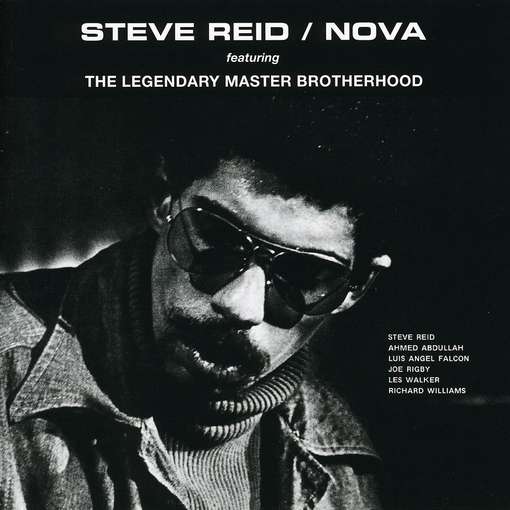
Steve Reid ft. the Legendary Master Brotherhood ~ Nova [Mustevic, 1976]


A1. Nova
A2. Lions Of Juda
A3. Free Spirits - Unknown

B1. Long Time Black
B2. Sixth House

Bass [Acoustic] - Luis Angel Falcon
Bass [Fender] - Richard Williams
Drums - Steve Reid
Piano, Organ [Electric] - Les Walker
Producer - Steve Reid
Saxophone [Alto, Soprano, Tenor] - Joe Rigby
Trumpet - Ahmed Abdullah

Recorded March 25, 1976 at Studio WE New York City

'This is an astounding record by an artist who has been criminally neglected. The list of those who could make out jazz funky is a short one. Ornette of course springs to mind as do the musicians of the Art Ensemble and their Chicago brethren. Drummer Steve Reid must now be added to that list. From the swaggering thunder of 'Lions of Juda,' to the gentler songs that close this album, there's nary a misstep. This music is as beautiful and dangerous as a shower of broken glass -- just when you think you've got a song figured out, this clever group of largely unsung musicians heightens the tension and takes things careening off in an unexpected direction. Have no fear though, these men are always nothing if not firmly in control. This is a wonderful document of a long vanished New York scene that was long on every emotion, not just fury. Find this album and buy it.' ~ Rob Ferrier

didn't know til just recently that the superb jazz drummer Steve Reid croaked from complications of throat cancer back in April. what total drag, he was only 66. may his spirit live on. this is likely my favourite of his recordings. 320 blessings to the og illuminators

snag the re-ish

Sunday, August 8, 2010

Noah Howard ~ The Black Ark [Freedom, 1969/72]


A1. Domiabra
A2. Ole Negro

B1. Mount Fuji
B2. Queen Anne.

Noah Howard : alto
Arthur Doyle : tenor
Earl Cross : trumpet
Leslie Waldron : piano
Norris Jones : bass
Mohammed Ali: drums
Juma : congas

Recorded at Bell Sound Studios, New York City, 1969


'Like rarely performed operas, hard to find recordings are often obscure for a prosaic reason: they're no good. Here's a monumental exception to the rule. The Black Ark—released in small numbers on the Freedom label in 1969, out of print almost overnight, and a holy grail for collectors practically ever since—is forty minutes of passionate and thrilling music, new-thing free jazz as great as practically any that came out of the late 1960s without saxophonist John Coltrane's name on it.

Seventeen years younger than Coltrane, alto saxophonist Noah Howard arrived in New York in 1965, aged 22. He formed a quartet, made a couple of albums for ESP, and—before moving to Europe in 1970—put together the septet which made The Black Ark. By 1969, Howard was terrifyingly good: as a player, composer and bandleader.

The four originals which make up The Black Ark—a mutant blues, a free jive samba, a cod-Japanese 'ying-tong' melody and a wonderfully lyrical ballad—are catchy and hummable, at a time when most free jazz rejected tunes and structures [or was too untutored to create them]. Howard brings a similar degree of form to his band: theme statements bookend each track, solos are taken individually [Mount Fuji" contains the only section of extended collective improvisation], and the length of each player's solo is precisely pre-determined, with Howard taking the longest spots.

As an alto player, Howard is often tagged with Ornette Coleman. In fact, he sounds more like a tenor saxophonist, bringing to his smaller instrument much of the tenor's weight and booting force. He's a hefty player. The closest contemporary comparison is perhaps with tenor saxophonist Pharoah Sanders, another musician balancing ferocity with trippy melodicism, to their mutual advantage.

For unrelenting screaming banshee saxophone, the septet includes tenor player Arthur Doyle. As the original album's liner notes have it, in words that can't be bettered, Doyle is propelled throughout by an almost incoherent rage, a chaotic and murderous sound. Howard's deft trick as leader is to keep Doyle's eruptions strictly time-constrained—a couple of choruses of sonic excess per solo, and out. Trumpeter Earl Cross, another furiously intense soloist, though a less tonally monolithic one, is similarly under manners. The result: neither player outstays his welcome and you don't have to be a smack head to enjoy them.

The rest of the band is a blast too, particularly the agile, powerhouse bassist Norris Jones and drummer Muhammad Ali [the younger brother of Coltrane's post-Elvin Jones drummer Rashied]. Jimi Hendrix's Woodstock conga player, Juma, doesn't just add color, but working with Ali brings real propulsion to the music [the duo's interaction on 'Mount Fuji' is a delight]. Almost forty years after its original release, undimmed by familiarity, this record is like a really, really late, really, really exciting birthday present. ~ allaboutjazz

a lovely album + a 320 rip = a pleasant morning

Monday, July 26, 2010

Pierre Bastien ~ Eggs Air Sister Steel [In Poly Sons, 1996]


01. Eggs Air Sister Steel
02. Exercise II- Still!...
03. X (R6) II Zi [L]
04. Les Aigues Errent, si Ceux d'Eu se (dis-)Tillent
05. Les Stèles de Xercès (lipophone)
06. Eh! Gueuse- Herse Hisse de ceste
07. Les Eres d'Exil de Liszt
08. L'Aigre Hélice du Styx
09. Aiguise l'Aire de cette Ile
10. Elyt Sed Secic Rexe
11. Et Que Sert (sic) ce Dé Hostile
12. Air de Style Exquis
13. Eggs Air Seas Dust Hill


Laurent Fauconnet - percussions (5)
Didier Lagarde - piano (7)
Jean-François Ott - violoncelles (10)
Christophe Petchanatz - piano (5)
Françoise Petchanatz - piano (5)
Denis Tagu - accordéon (6-13)
Laurent Fauconnet : percussions (5)
Didier Lagarde : piano (7)
Jean-François Ott : violoncelle (10)
Christophe Petchanatz : piano (5)
Denis Tagu : accordéon (6, 13)
Mecanicum - buzzing (2), inanga (3), trompe (4), sanza, castagnettes, tambourin (6),
gong (7), xylophone (6-7), tambour (11), godje (12), guitare (13)


the francophonique love-affair continues with yet another encroyable offering from this mad scientist & his pals, both human & mechanical. dedicated to Ray [Charles], Monk [Thelonious] & Eno [Brian], but channeling everything from Banda polyphony & Waza trumpet ensembles to the Residents. one of me favourite recent discoveries & utterly unmissable. 320 remerciements à le french connexion e twicezonked pour le livret. please support l'artiste

Thursday, July 22, 2010

Catalogue ~ Pénétration LP [1982]


01 - Stop Stress - Ultim Arlène
02 - Khomeiny Twist
03 - Dérisoire
04 - Pénétration
05 - Absolution
06 - Demnächst Mon Amour
07 - Orphelinat
08 - Khomeiny Twist #2
09 - The End


Gilbert Artman : drums, organ, piano
Jean-Francois Pauvros : bass, guitar, harmonica, piano, vocal
Jacques Berrocal : cornet, gong, flutes, vocal, words

rec. live April 16 & 17, 1982
at Brasserie Birseckerhof, Basel


amazing otherness from this way out improvisational supergroup of sonik experimenters. wicked fuggin good. at times kinda reminiscent of a more ramshackle [& french] Debris. seems our forefathers at mutant sounds upped this one previously at 192, but that link est mort. here it goes again at a robust (((320))) remerciements à espilos. +

Baroque Jazz Trio LP + 7" [Saravah, 1970]


SH 10 004 LP
A1 Delhi Daily
A2 Terre Brulée
A3 Chandigardh
A4 Latin Baroque
B1 Zoma
B2 Cesar Go Back Home

SH 40006 7", 45 RPM
A Orientasie
B Largo

Cello [Violoncello] - Jean-Charles Capon
Drums - Philippe Combelle
Harpsichord - Georges Rabol


'Beautiful stuff – and one of the most stunning jazz albums ever recorded – a blinding mix of harpsichord, cello, and Indian percussion – with a sound that's unlike anything else we can think of! The album was the brainchild of the cross-culturally fertile Saravah records at the end of the 60s – home to experimental work by Brigitte Fontaine, Barney Wilen, The Art Ensemble Of Chicago, and others. From the start, the group wanted to work in a boundary-less territory that really pushed the limits of jazz – drawing in inspiration from world music, and working in a style they called "baroque", to emphasize the bizarreness of their project. Given the heavy use of tabla on the set, the album's got a really driving rhythmic component – making for some funky numbers that have been sought-after jazz-dance tracks for years. And the role of the harpsichord is surprisingly strong – played in almost modal lines, but with a hesitating, lilting groove that's quite different to similar use of the piano at the time.' - crusty groove hype

seen this one kickin around the interwebs of yore, but couldn't find an active link anywheres & since i'm on a saravah kick, it seemed appropriate that this one ought live here as well. don't need justification for being piratical, but honour must exist even amongst thieves. we try not to post albums easily available elsewhere unless we can somehow improve upon em, as life's too short to be redundant & there remains plenty with zero representation in the greater grokosphere. harpsichord, violincello, traps, tablas & even a bit o' jazz flute fire :) 320 remerciements à the og artists, label & uploada

Monday, July 5, 2010

Marion Brown ~ Why Not LP [ESP Disk, 1968]


A1 La Sorrela 12:35
A2 Fortunato 8:30
B1 Why Not 6:50
B2 Homecoming 10:00

Recorded October 23, 1966 in New York City.

Saxophone [Alto], Composer - Marion Brown
Piano - Stanley Cowell
Bass - Norris 'Sirone' Jones
Drums - Rashied Ali
Photography [Cover] - Guy Kopelowicz
Recorded By - George Klabin

'Issued in 1968, Why Not? is Marion Brown's second outing for the ESP label as a leader. The saxophonist also guested on a Burton Greene date earlier that same year. Featuring pianist Stanley Cowell, Coltrane alumnus Rashied Ali [Coltrane had been dead less than a year at this time), and bassist Norris Sirone Jones, Brown reveals his great strengths as a composer and bandleader, which are matched by his abilities as a soloist. The opener, "La Sorella," features a gorgeous opening solo by Cowell. Using large and intricate chorded modal phrases, Cowell creates a virtual chromatic field for the rest of the rhythm section -- Jones, in particular, responds in kind with scintillating three-string figures that add a deeper series of conical figures for ballast. Brown enters just behind Ali in full cry on the alto. Using a Coltrane-esque song figure to respond to Cowell's stunningly beautiful foundation, Brown blows lean but long lines before a long solo by Jones cuts them all quiet. When the band enters, they are in prelude form, with spun-out piano lines ever in anticipation and Brown calling something out of the ether that never quite materializes, which is fine because on "Fortunata" it does: a ballad that develops into something wholly other without changing tempo. This is jazz as expressionism; it doesn't need to be "free" because it has been untethered from the opening bars. Brown's solo here lilts on the branches of Cowell's arresting, nearly Debussian chromatic figures that extend harmonic ranges almost without end. By the time the band gets to the title track, a free workout in a dizzying tempo, the listener is grounded enough in Brown's composed lyricism so as not to be surprised at all when the fury of the tempo is elongated by the temperance in tension the band creates. Finally, on "Homecoming," where the ballad begins to show its face once more, each member steps in to underline and deconstruct it by using contrapuntal lyricism as a contrast. Even Ali, one of the great powerhouse drummers, dances rather than sprints around the band, even in his lengthy solo. This is a phenomenal album, a place where Marion Brown got to reveal early on why he was such a formidable force: He understood the inherent importance of musical traditions and he also understood how imperative it was to them and to jazz to extend them in a manner that left their roots clearly visible.' ~ amg

know the ledge

Wednesday, June 23, 2010

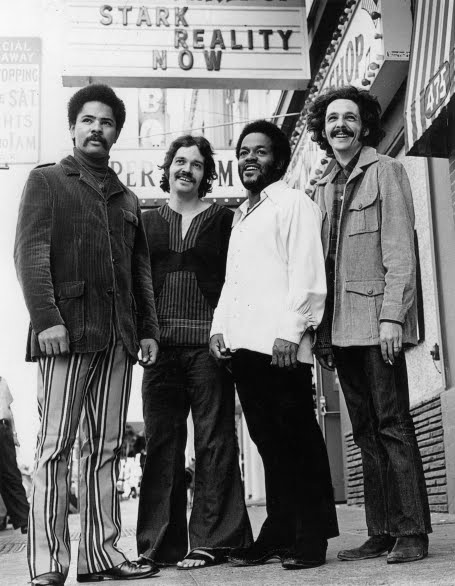
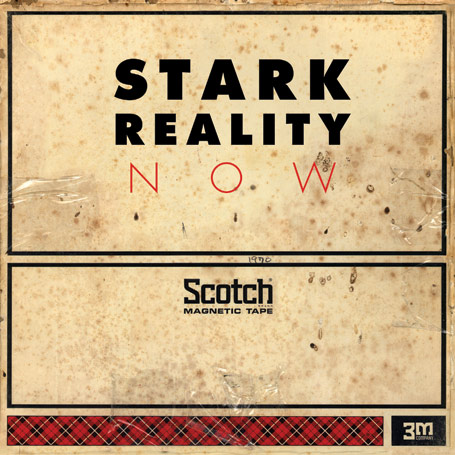
Stark Reality ~ Now


01 Junkman's Song
02 Thirty Days Hath September
03 Cooking
04 Comrades
05 Shooting Stars
06 Rocket Ship
07 Dreams
08 All You Need To Make Music
09 Roller Coaster Ride
10 Too Much Tenderness
11 Sunday's Song
12 Say Brother

Monty Stark [vocals, vibraphone]; Phil Morrison [vocals, electric bass]; Vinnie Johnson [vocals, drums, percussion]; John Abercrombie [guitar]; Carl Atkins [flute, saxophone, baritone saxophone]; Stanton Davis, Jr. [trumpet]; Alan Reed [electric bass]


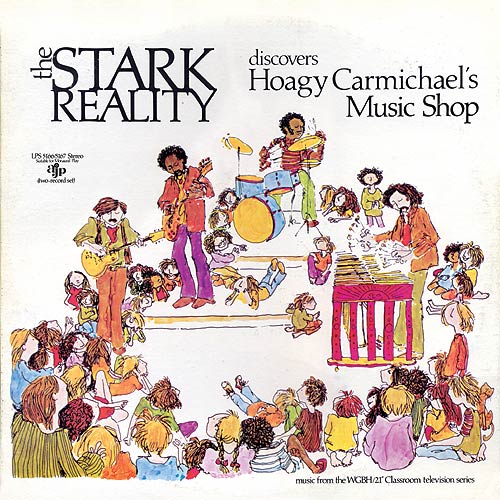
crusty groove hype: 'One of the most tripped-out albums of funk ever. a rare treasure with a very unusual history. The Stark Reality were a cool little combo formed to work on public television in Boston in the late 60s featuring some heavy guitars, fuzzed-up vibes, and some monster percussion laid out in tight bass & drum rhythms that were years ahead of their time. The group recorded one rare album -- ostensibly a children's record, but based around old compositions by Hoagy Carmichael, completely pulled apart, sliced up, overly harmonized, and spat out into wild funky tunes that bear no resemblance to their originals! The original album -- Stark Reality Discovers Hoagy Carmichael's Music Shop -- has been a holy grail for collectors for years [we once sold a copy for hundreds of dollars], and the music has only ever really been heard by a few dedicated beatheads that have tracked down rare copies. Now, though, the geniuses at Stones Throw have put out the whole LP, plus bonus material, in one fantastic package that is soon to make the Stark Reality legends amongst funky fans the world over! Mad vibes meet fuzzy guitars meet killer funky beats -- and the whole thing's a masterpiece that will never be duplicated again!' mas. amazin distorted vibraphonique magic band otherness throughout. 320k for the noodle bakers. yea