01. Arpadys – Funky Bass 5:45 02. Spatial & Co – Baby Bass 2:45 03. Voyage – I Love You Dancer [Instr. Vers.] 5:43 04. Spatial & Co – Bass Power 5:59 05. Arpadys – Monkey Star 6:19 06. Spatial & Co – All The Bass 2:48 07. Spatial & Co – Exotic Guide 3:27 08. Disco & Co – Cold Coke 9:28 09. Arpadys – Stone Roller 5:27 10. Spatial & Co – Future Vision 3:42 11. Disco & Co – Phantom Rock 5:32 12. Spatial & Co – Space People 4:28 13. Voyage – Point Zero 4:24 14. Spatial & Co – Electric Maneges [Instr. Vers.] 4:05
Arranged By – P.A. Dahan, Sauveur Mallia Bass, Electric Bass [Fretless Bass], Synthesizer, Vocals – Sauveur Mallia Drums, Vocals – Pierre Alain Dahan* Electric Guitar, Acoustic Guitar – Slim Pezin Electric Piano [Rhodes Piano] – Jean-Pierre Sabar Percussion, Electric Piano [Rhodes Piano], Other [Keep Cool !] – Marc Chantereau Synthesizer [Poly Moog], Synthesizer, Electric Piano [Rhodes Piano] – Georges Rodi [1, 5, 9]
'A treasure trove of late 70s French disco funk – actually sound library material from the Tele Music archives – featuring positively killer bass lines, keys and drums, with a warmth and a groove that just slays so much of the better known dancefloor material of the era! Includes great stuff by Spatial & Co, Disco & Co, Voyage and Arpadys. Classic cosmic disco all the way' dusty
the most crucial tracks as cherry-picked off several late 70's space disco group albums on Tele Music library, allah dem featuring Sauveur Mallia in some capacity [or another]. a real guilty pleasure round these parts, not to be confused with 2005 stars group or black devil, but operating in a similar orbit. killer dance-floor fillers in 320 or FLACK, jacques. just don't hate til you heard, ya herd? dj's take note
01 - Charlotte Leslie - Les Filles C'est Fait... 02 - Christie Laume - Rouge-Rouge 03 - Les Fleurs De Pavot - A Degager 04 - Danyel Gerard - Sexologie 05 - Richard De Bordeaux - Je M'Ennuie 06 - Christine Pilzer - Champs Elysees 07 - William Sheller - Exitissimo 08 - Les Papyvores - Le Papyvore 09 - Stephane Varegues - Le Pape Du Pop 10 - Messieurs Richard De Bordeaux & Daniel Beretta - Psychose 11 - Monique Thubert - Avec Les Oreilles 12 - L'Oeil - Bernadette 13 - Messieurs Richard De Bordeaux & Daniel Beretta - La Drogue 14 - Philippe Nicaud - Cuisses Nues, Bottes De Cuir
oldie/goodie comp of freaky french psych that remains incredibly listenable throughout & is something of a guilty pleasure around here [along with vol 2], despite being quite crude at times :) dj's don't sleep on this beautiful mess or the previously dropped stunner shake sauvage. friday nite party muzak incarnate. shouts out to miskov fer his enduring resourcefulness
B1 Hache 06 4:43 B2 Appel De Libra 1:10 B3. Poursuite 1:18 B4. La Ville 4:42 B5. Les Cosmonautes 2:12 B6. Avecandista 5:51 B7. Tis A Song 2:33
Bass - D. Cambier Brass - A. Rébé , Armani (2) , C. Dachez , D. Daure Design [Sleeve] - Georges Perdriaud , Roland Moreau Drums - C. Roulet Guitar - A. Martinet Guitar [Solo], Acoustic Guitar , Resonator Guitar [Dobro], Bass - Patrick Verbeke Organ, Vocals - Allan Jack* Performer [Birds] - J. Legras Photography [Back] - Guy Encina Photography [Front] - Jean Rous Sitar, Synthesizer, Keyboards, Directed By - Philippe Besombes Vocals - Biscotte , Brigitte Grossin , C. Beaumont , C. Brau , C. Verbeke , G. Perdriaud* , J.D. Umpleby , P.J. Knowles Vocals, Bass, Acoustic Guitar - Alain Legros Vocals, Whistle - Françoise Legros owl tracks written by Besombes except A10 [Verbeke] & B7 [A. Legros , Hoarau]
Recorded at Studios du Chesnay. Wednesday August 9, 1975. Music for the film of the Groupe Pattern [Roland Moreau, Georges Perdriaud & Jean Talansier].
now this is head muzak, puren simple. undoubtedly amongst the trippiest of slabs to spin whilst under the influence of superior psychedelics. heavy themes too. a much needed interwebular upgrade made possible by the impeccable taste & resourcefulness ov miskov ov exp etc fame. daps in kind dear brother. long-winded review just hither. 320 apparitions later. further
01. Wild wolves in canada: four young on a small island 1:34 02. Wild wolves in canada: a large, very excited pack 1:26 03. Wild wolves in canada: a small pack in a mixed forest 1:41 04. Wild wolves in canada: another pack a little further off 2:32 05. Wild wolves in canada: a family of two adults and three young 1:28 06. Wild wolves in canada: another pack in forest at nightfall 6:02 07. Semi-captive wolves in france: a chorus during early night 4:54 08. Semi-captive wolves in france: various cries and growls of the same family 11:03 09. Semi-captive wolves in france: cries from another pack in the middle of the night 7:07
recorded in 1965
'To listen to the concert made by wild wolves in a forest is an unforgettable experience! No doubt partly due to a shiver of ancestral fear awoken in us, but above all for the real musical quality of a chorus of several voices. The title “Wailing Wolves” applies to the first six recordings, made by Bill Gunn in Algonquin Park, Ontario, Canada. The next three recordings were made by Jean C. Roché in a French park, in Lozère, southern-central France, which has free-running European wolves.' ~ Patrick Frémeaux
sounds exactly how it looks: earie. every good home should have at least one recording of wolves to break out at parties. 320 rips later
01. The Blue Bird 02. Crépuscule hawïen 03. Manuska 04. Hawaï nous appelle 05. Sérénade bleue 06. Retour d'Hawaï 07. J'écoute la guitare 08. En écoutant l'ukulélé 09. Addio Signora! 10. Hawaiian berceuse 11. Je n'ai plus personne 12. Reflet viennois 13. Viens dans ce joli pavillon 14. Hé hop la hé 15. C'est une valse qui chante 16. Waikiki en fête 17. One kiss 18. La destinée du marin 19. Le jeune pêcheur 20. L'ile aux rêves d'or 21. Chant d'amour de Tahiti 22. Ay, ay, ay 23. De tout mon caeur 24. Dans la nuit 25. Avant de mourir
Gino Bordin [1899-1977] was born on 4th February 1899 in Vicenza, in the north east Italy. His eldest brother led an orchestra in which Gino played the musical saw and sometimes harp-guitar acquired from Luigi Mozzani, at Cesta. There he struck up a friendship with the prodigy Mario Maccaferri.
His name first appeared beside that of Michel Péguri, an accordionist, on a Perfectaphone disc where the record label showed “ banjo : Gino Bordin”. Although he later abandoned this banjo for guitar and Hawaiian guitar, he continued to play with musette accordionists until the end of his career.
In the 20s Gino supported other accordionists on his guitar and chanteurs and chanteuses also began to call on his talents as accompanist and writer. All doors opened for him, and, significantly, those to the recording studios. When the record companies realised the sudden taste for Hawaiian guitar, the slenderness of their catalogue licensed from America in this genre and the need to add a repertoire more to French public taste, they turned naturally to Gino Bordin, already a virtuoso on the instrument.
Perfectaphone recorded Dreamland and Beautiful Hawaï by Gino Bordin, Hawaiian guitar. Then Pathé issued in early 1928 four other covers of standards interpreted by a Hawaiian Trio, Bordin, Kamenetsky and de Lignori. From then Gino Bordin went on to record hundreds of titles for at least 15 labels, in his own name and also under various pseudonyms. We can count at least 120 sides for Parlophone, over 60 for Polydor and Pagode, at least 20 for Pathé. The Odéon label issued over 30 to which we should add English pressings on Decca and Ariel, those on Columbia and Polydor in Japan, Parlophone in Australia and Brazil. There were yet more titles on Salabert, Omnia, Grammophon, Supraphon, Disc Art, Gladiator, Colisée, MP, Clarus, Discum, Unifix and, after WW2, Pacific, Vogue, Mode, Mondo Music, Nixa, Saturne and Charmilles... that’s without counting the many discs he played on where the record label credit simply read: Hawaiian trio or Hawaiian Guitar
Gino Bordin adapted the guitar from Honolulu to every musical style. There were only a handful of Hawaiian standards or hapa haole tunes, but there were many originals including classical, in all sorts of orchestrations, from guitar duo to large string formations, in instrumental versions or with refrain. SACEM (the music copyright agency) handles a catalogue of about forty works written by Gino Bordin either alone or with co-writers Gardoni, Ferrari, Viseur and Saarbecoff. That short list doesn’t tell the full story because published sheet music and record labels show that he was the prolific writer of dozens more instrumental pieces and songs.
French radio stations broadcast Gino Bordin’s records widely and also invited him to play live in their studios. Then Radio Lausanne and stations from Hilversum in Holland spread his fame throughout Europe.
Now a star on records and radio, Gino increased the number of his concerts and tours. Since 1926 he had sported the white Hawaiian outfit and red silk sash, slipped the lei around his neck, posed with guitar flat on his lap and livened up the dance-halls of the casinos, at Dinard, Saint Jean-de-Luz and Monte-Carlo. In 1931 his orchestra consisted of three dancers in exotic dress, Alex Manara on second Hawaiian guitar, Vincent Kamenetsky on guitar and Joseph Puni, the authentic Hawaiian, on ukulele. Later Le Trio Havaïen saw Gino flanked by Jean Stéfani and André Thomas, Tino Rossi’s guitarists. As for the Bordin-Manara duo ...that was seen at every possible opportunity, and notably opened for Édith Piaf at the ABC in 1937. Gino Bordin played on all the great Paris stages, Paramount, Gaumont, Rex, Alhambra, Bobino, Européen, Vel’ d’Hiv, at the Carlton in Cannes, at Monte Carlo’s Palm Beach, at Maxim’s in Athens. He criss-crossed North Africa, went as far as Alexandria and Cairo, and went through Lausanne, Zurich, The Hague, Amsterdam and Rotterdam. During the war a lengthy tour took him to the Wintergardens in Vienna and Berlin and all across Germany to Prague and Warsaw
In France the guitar from Hawaii owes its popularity to Gino Bordin. At first he used a pear shaped acoustic Hawaiian guitar then being made in the Vosges. In 1932 Mario Maccaferri produced for Selmer his jazz guitar with resonator chamber which Django made famous and he designed at the same time a 7 string Hawaiian model without cutaway, an idea conceived with his friend Gino. In early 1936 it was Maccaferri who again brought him right up to date when he returned from a USA visit carrying under his arms a National lap steel electric 7 string, immediately christened the “Magic Guitar” by Gino and plugged in at the studio in May that same year. Gino, pioneer of the electric guitar, had already contributed to the instrument’s evolution by adding a low seventh string in 1931 and using a seventh tuning, then later a 6th tuning. His Nouvelle Méthode de Guitare Hawaïenne à Sept Cordes (New Hawaiian Guitar Method for 7 strings) published in 1935 by Max Eschig contained a “Transposer”, a cardboard device with holes which denote on the frets the location of notes for each chord. Based on a similar principle he also produced a set of 16 cards “500 guitar chords by the perforated strip system”. He published collections of arrangements for the instrument and up until the mid 1960s gave lessons at his home on or in the posh colleges of the southern suburbs. During this period Gino was still appearing in cabaret and still playing on stage with Fredo Gardoni. His career had lasted all through the 40s and 50s. He accompanied Patrice and Mario, then Tino Rossi once more ...and Lucienne Delyle too, while his records for Pacific and Vogue had wide distribution and the younger generation of players, Harry Hougassian and Marcel Bianchi considered him a master. From 1965 however Dupuytren’s Contracture reduced the movement in his left hand and forced him gradually to rein in his musical activity. In 1969 he retired to l’Isle-sur-la-Sorgue. And that’s where he has been at rest since 14 July 1977 - liners
superb hawaiian gypsy jazz. darker & more doleful than the typical fare & perhaps more timeless as a result, but then i do dig the somber schtuff. would certainly love to find this in more prestigious bits, but til then this'll hafta do :)
01. Polychrome 02. Les Enfants Perle 03. Midi 04. Mais 05. La Coupe 06. Sleep Well 07. L’usine 08. Les Vieux Comptoirs 09. Les Musiciens 10. L’arbre Et L’oiseau 11. La Camarde 12. Petit frere
'Mod & psychedelia inflected French pop from Claude Lombard – a Belgian singer who found her niche in France – her wildy groovy self titled album from 1969! The sound is fantastic, with the sounds of the late 60s that could be found on pop psyche and easy gems internationally at the time, but it's got a vibe it's all it's own! The girlish vocals, chiming acoustic guitars, and rumbling bass all remind us a bit some of Lee Hazlewood's productions in the mid to late 60s, but there's a lot more going on here, with touches of bossa nova, some really spacey sound washes, and uber insistent melodies. Wonderful!' ~ dusty
still on de road, but was compelled to spread the holyday cheer around a bit. this glorious gift was thoughtfully slipped in our comments by a sweetheart who calls himself Michael, so kindly extend yer warmest seasonal blessings upon him for his most resonant rip of sultry, space age sounds from cosmic chanteuse Claude Lombard. this is exactly the kind of sharing we live for as we travel the crooked highways of this once proud land soaking up these trippy, romantic vibes. 320 remerciements à frère Michael!
Conductor [Direction] - Henri-Jean Enu Guitar - Daniel Hoffmann Bass - Jean-Pierre Lentin Performer [Le Temps] - Sylvie Peristeris Guitar [Solo] - François Guildon Percussion - Dominique Lentin Violin - Léo Sab Piano - Benjamin Legrand Producer - Gérard
Recorded July 8th, 1971 and mixed December 7th, 1971 at Europa-Sonor studio
This album was originally planned for release as an LP on Futura Records in 1972. Test pressings were made [approximately 5 copies], but for financial reasons, the LP was never released. In 1994, Mellow Records issued the album on CD, in an edition of 200.
here's another blawgland upgrade that's been unjustly rotting in file hosting limbo since the early daze of der warbler, i believe because the fine folks at root blog [who we dearly love] thoughtfully upped it literally minutes before we intended to. as any cognizant blagger can readily attest, like-minded overlap is actually a fairly common occurrence & it's kinda trippy how seemingly synchronistic our collective subterranean sensibilities can be at thymes. i mean when i bought this disque some 15 years ago, youngsters really had to dig to hear more than a handful of artists on the then-mythical NWW list. happily, with the advent of the interwebs & generous individuals who regularly feed our heads by sharing obscure pearls on a daily basis, the landscape has changed dramatically, as has my concept of what 'underground' is. we never had it so good & i no longer think of any recording as being impossibly rare because you can find most everything if you dig deep enuff. still, i know what i like when i hear it & this one remains a holy grail of idiot savant garde off kilter free improv experimental spacerawk weirdness, like so many fabulous bands of the fertile 70's french underground scene. there's even a hurdy gurdy workout on here! i been turning my more adventurous frenz onto this sprawling masterpiece for many moons & certainly advise you wisely skore the recent vinyl re-ish if you got it like that. 320 kbps et skans en français + highly mf recommended
A1. Moshi 17:00 A2. Guilde's Song To Binkirri 2:55
B1. Gardenia Devil 6:00 B2. 14 Temps 4:50 B3. Bamako Koulikaro 3:50 B4. Afrika Freak Out 6:20
C1. Zombizar 7:20 C2. El Hadji 0:24 C3. Chechaoun 12:00
D1. Tindi Abalessa 10:25 D2. El Hadji 1:00 D3. Balandji In Bobo 3:06 D4. Sannu Ne Gheinyo 5:20 D5. El Hadji 0:20
Barney Wilen - tenor sax Michel Graillier - electric piano Pierre Chaze - guitar Simon Christian Tritsch - electric bass Micheline Pelzer - drums Didier Leon - takamba - oud Caroline de Bendern, Marva Broome, Babeth Lamy, Laurence - vox Composer - Barney Wilen [trx: B1, B4, C1, D4], Caroline De Bendern [trx: B1, C1, D4] Producer - Pierre Barouh Recorded By - Daniel Vallancien
Gatefold cover. Recorded in Studio Saravah. "Gardenia Devil" is taken from a poem of the chinese people. All other uncredited composed by tracks based on traditional folk songs.
'In 1970 Barney Wilen assembled a team of filmmakers, technicians and musicians to travel to Africa for the purpose of recording the music of the native pygmy tribes. Upon returning to Paris two years later, he created Moshi, a dark, eccentric effort fusing avant jazz sensibilities with African rhythms, ambient sound effects and melodies rooted in American blues traditions. Cut with French & African players including guitarist Pierre Chaze, pianist Michel Graillier and percussionist Didier Leon, this is music with few precedents or followers, spanning from extraterrestrial dissonance to earthbound, streetlegal funk.Wilen pays little heed to conventional structure, assembling tracks like 'Afrika Freak Out' & 'Zombizar' from spare parts of indeterminate origins' ~ amg
'A wild and groundbreaking record recorded by the great French tenor player Barney Wilen! Although he got his start as a bebopper in the 50's, Wilen sort of dropped out of sight by the end of the 60's and only emerged from time to time to cut strangely experimental sides. This record is unlike anything he ever made, and features a wild mix of African rhythms, ambient sound, and Wilen's deep deep tenor. By this point, Wilen had been absorbing a lot of different influences, from Coltrane, to Pharoah Sanders, to some of the European free players, and his sound is a weird mish mash of styles that weaves in and out of all the stuff on the record. It's a haunting bit of afro jazz & funky noise, with some cuts that are spacey, and others that are nice and funky.' ~ dusty
lately when i make a new jazz discovery, assimilate the sounds & decide i might wanna spread the gospel to you good peeps, a quick search in the engine reveals many a classique joint was owlready ushered into interwebular consciousness by one of several seminal jazz blawgs, whose illuminating arkhives will spread yer awareness like a fan. unfortunately, i seem to be about 3 years too late on some of the links when i trawl thru the backpages, but occasionally stumble upon a few rips in a roundabout way. thus, i am excited to bring you yet another pearl from the essential orgy in rhythm dustbin, on the groundbreaking saravah imprint. bacoso sez: 'Completely bonkers mash up of afro to free jazz with field recordings and vocal harmonies - out there and all the better for it. Recommended.' & eyed hafta humbly concur with that assessment. dear professor leary from a few years earlier comes highly recommended as well. 320remerciements à la révélateur d'origine. further
A1 "H" Friend 5:43 A2 Timing, Forget The Timing 4:34 A3 One To Choose 4:57
B1 We Never Fly Away Again 4:53 B2 Follow Me (Instrumental) 5:15 B3 No Regrets 5:00
'Originally released in 1978, Black Devil's 'Disco Club' is an extremely rare disco masterpiece, an epic journey into the deepest electronic disco. The record is credited to Junior Claristidge and Joachim Sherylee, pseudonyms of two french library writers Bernard Fevre and Jacky Giordano, respectively. It was made manually in a recording studio in the suburbs of Paris using synths and occasional tape loops and a drummer. No midi or computers'
i am new to the game & don't really know the ropes, but owl instructed me not to post anything that's on a million other blogs unless i could somehow improve upon it. so yes, i see this is on a million other blogs, but when i mentioned these cats in the umberto drop, it made me realize that everyone seems to be sharing the same rip of this album. so here goes my transfer at 320 which naturally sounds amazing & will fit perfectly on your hq mixes ;-) i really envy any youngsters who get to hear this for the first time. do not hesitate to follow the link for more Bernie Fevre supersounds. the Musax material is particularly potent & provided there's interest, i just got a new black devil dub joint i could post in the future
A1. Balance A2. Un Matin a St. Anand A3 San Fedo A4. Recontre Impromptue A5. Big Ben A6. Dernier Flash
B1. Voyage ou Comment y Aller B2. Seven Easy Calls B3. Special 2 B4. Melopee a Retard B5. Georges B6. 10 '' GMT
'Kha-Ym was a duo of Alain Gerbe and Jacky Michaud. Alain conceived the album on his own and essentially played all the other parts on the recording - bass, percussions, guitars and keyboards. He brought in Jacky to fill out the drums and add additional percussions. Influenced by their interest in progressive music, they decided to create an album. Alain wrote the music, and the duo practiced for some time before they began recording, in their home, with two Revox A77 tape machines. That way they put together all the tracks recorded to be included on their only album - 10" GMT. Knowing in advance that no big label would sign them because their music was not commercial [& punk was the flavor of the season at the end of the 1970s], they decided to press the album themselves at FLVM, a French ‘do it yourself’ label. Before taking it to press, the guys added some overdubbing at Roanne studio with sound engineer Mark Tamburro, and the album was released as a Roanne Music record. The big advantage at the Roanne studio were the additional instruments and the polyphonic Korg synth that Alain used through the recording.' source
'A duo, composed of a multi-instrumentalist (keyboards, guitar, bass, voice) and a percussionist, which offers an album constituted of multiple, short, varied, polished, inventive, instrumental pieces, with a naîve charm, sometimes evocative of EDEN, EGG or ROEDELIUS. The compositions are attractive, built around and developed around some organ's notes, some guitar's chords or some outlines of melodies, often delicate and fragile, constructed by the keyboards whose the multiple registers and sounds create solemn and precious tones or sometimes evoke the timbre of a harpsichord, a harp or a mechanical organ... Original and excellent' source
owl asked me to post some obscure 'classics' & while i've never been a huge fan of 'prog' per se, this is music to my ears. weird diy keyboard driven bedroom prog with some occasional baroque folque elements i guess & a really unique vibe throughout. no two songs sound the same & they have many different styles, all of them ace & super listenable. it was difficult to choose a representative sound sample because this record just keeps getting better & i have a different fav depending on the weather. i know i'm pretty terrible at writing record reviews but i hate reading them anyway. that's why there's quotes! a 320 rip of a wonderfully original album, perfect for a rainy day like today!
'This is a wonderful lost album of grooves from France and it's got a sound that's unlike anything else we've ever heard. The group is a smooth funky jazz group with lots of electric bass and Fender Rhodes, similar to some of the Italian groups of the 70s [like The Cabildos], but they've also got a female singer in the mix, and she sings these groovy jazz vocals that have an airy breezy quality, similar to some of the best Brazilian fusion from the same time. The result is a stunning electric groove with a feeling that's really fresh, nice and warm, and funky in all the right parts. The original album's rare as hen's teeth and this reissue is very nicely done! ~ dusty
by request. seems the previous post was corrupted on a few tracks so if you grabbed it, you might wanna try this copy instead. come to find out the beatmakers for infamous prison guard Rick Ross, sampled 'chanson d'un jour d'hiver' so inventively on this track, my ears almost vomited feces! anyhow 320 remerciements à l'uploader d'origine
01 Montagne Sainte Genevieve 2:02 02 Gagoug 2:33 03 Chez Jacquet 2:20 04 Choti 1:53 05 Tziganskaïa 3:06 06 Songe D'Automne 2:47 07 Mademoiselle De Bucharest 2:02 08 Gagoug 3:19 09 In Einer Kleinen American Bar 1:58 10 Cher Ami 2:49 11 Sombre Dimanche 3:01 12 Pouro Rom 3:10 13 Madona 3:03 ~ Written By - Smith/Praeger 14 Soline 2:50 15 Charmaine 2:39 16 Tchoucar Valsarie 2:03 17 Fascination 2:54 18 Nette Presse Pas 3:13 19 Kleine Harmonika 2:36 20 Amoureuse 3:00 21 Ambiance Tzigane 2:51 22 Choti 2:30 23 Petite Fleur 3:42 24 Berusovie 2:12 25 Route Des Acacias 4:08 26 Valse Des Officiers 1:52 27 Caractere Slave 2:36
Cimbalom - Michel Villach [tracks: 5 - 27] Double Bass - Ernst Pseffer [tracks: 5 - 27] Guitar - Boulou Ferré [tracks: 5 - 27] Guitar [Rhythm] - Jacques Montagne [tracks: 1 to 4] Guitar [Solo] - Matelo Ferré Guitar [rhythm] - Sarane Ferré [tracks: 1 to 4]
Tracks 1 to 4 rec. Paris 1960 Tracks 5 to 27 rec. Studio Sidney Bechet, Villetaneuse, 1978
Jean Matelot Ferret was born in 1918 in Rouen, France. The youngest of three brothers, he did not wait for adulthood to go to Paris, instead he ran away from home to follow his older brothers. He was at the time 13 years old and already skilled at the banjo and violin. The famed violinist Jean Guelesco – the Czar’s violinist – convinced him to give up the fiddle and take up the guitar. Soon he was playing every where in Paris, from the cabarets russes to the jazz clubs of Montparnasse – and of course the bals-musette. Matelot was a professional guitarist and was capable of playing in any environment. He is renowned today for his masterpiece double LP 'Tziganskaia', and the recording he made with Jo Privat , Manouche-Partie, but he made many other recordings in a busy career lasting over 50 years. This master guitarist knew virtually every style of music. Matelot is often called the master of the gypsy waltz – but slight evidence exists to document this fact. In fact his oeuvre is so wide-ranging that it is impossible to discuss it in this space. Matelot Ferret passed away in 1989. He was survived by his wife Jacqueline and three sons, Michel, Boulou, and Elios. Great guitarists in their own right, the latter two can be found playing in Paris and around the world.
from the liners: Before the recordings by Matelo Ferret were issued on CD in 1988, one knew little about the gypsy guitarists from the 1925-1930 Parisian cabarets, caf’conc’, and dance halls, apart from those who played jazz. Some people were of course aware that the young Django Reinhardt – a six-string banjo virtuoso – played Monti’s Czardas brilliantly as well as the legendary gypsy Gusti Malha’s elaborated waltzes, such as La Valse des Niglos. Nevertheless, as few people in those days ventured into the Parisian zone, no one knew that in his youth Django had composed tunes that had made him famous in the popular world of the French capitol. No doubt this was the reason why these deeply inventive but forgotten waltzes – Chez Jacquet, Montagne Ste. Geneviève, and others – didn’t come to light until a small record with Matelo was issued in 1960, now representing the first four tracks on this CD. In the original liner notes Charles Delaunay remarked: 'Listening to these little masterpieces is enlightening about how much gracefulness, and what treasures, Django brought first to the musette orchestras, and later to jazz.' Furthermore, it is obvious that Django and his predecessor Gusti Malha’s approach to the instrument, their way of improvising accompaniment lines for accordionists, and of playing odd chromatic low notes, were a decisive factor in the elaboration of the famous Valses Gitanes.
Jean Pierre 'Matelo' Ferret was born in Rouen, France, on the first of December 1918, the youngest child of a Gitan gypsy family. Following in his brothers Baro and Sarane’s footsteps, he started playing the violin and banjo as a child in a dance hall. As musette was coming into fashion and Matelo’s fame as a talented musician grew in the Parisian musical world, he was soon asked to replace Gusti Malha at the side of the famous accordionist Émile Vacher at the Pigalle Abbaye de Thèléme. At the same time, he was working for Vétese Guérino’s orchestra at La Boîte à Matelots.
A short while later he turned to the guitar, and at the age of thirteen joined the well-known Rumanian gypsy violinist Ionel Bajac’s orchestra at the Casanova. There, thanks to the prodigious cymbalom player Nitza Codolban, Matelo came to understand the richness of the central European traditional forms of music were. The following year Matelo met Django and shortly after started integrating elements from Django’s complex style into his own. From that time on, Matelo was by the sides of the most outstanding gypsy violinists of the time: the “tsar’s violinist” Jean Gulesco, concert-performers like Valadarski and Zarate, later Pali-Gesztross, Gyula Kokas, Sava Neagu, Tata Mirando, and of course Yoska Nemeth. In little time Matelo became sought after because of his musical ability and his perfect knowledge of the repertoire. He would go from one Parisian spot to the other, always on the move like the true gypsy he was, from one Russian cabaret to another, playing at the Shéhérazade, the Tokay, the Monseigneur, the Dinarzade, the Tsarevitch, the Etoile de Moscou… all the historical places.
It is precisely that carefree, bygone tzigane atmosphere that this album by Matelo Ferret recalls: the sleepless nights in the dance halls, Russian spots, night clubs like the Montmartre Harlem or Jimmy’s Bar where crazy after-hours jam sessions took place. Here we find again the sound of Matelo’s guitar, which could play all musical styles and was at the sides of the best jazz musicians of that time – Michel Warlop, Eddie South, Benny Carter, André Ekyan, Alix Combelle, Hubert Rostaing, Gus Viseur, Tony Murena, & of course Stéphane Grappelli and Django Reinhardt. Here we can hear it playing with longing those tzigane melodies, Slavonic songs, and Viennese waltzes tinged with Czardas that the bohemian orchestras at the Café de Paris, Chez Mazim’s, and the Pavillon d’Armenonville performed so delightfully for their wealthy patrons. This “light music” takes another dimension under Matelo’s the, as it used to under the great Boldi and George Boulanger’s bows. Full of languor and zest, these deceptively simply melodies require an exacting technique and deep sensitivity from the soloist. Matelo doesn’t lack any of these qualities, and listening for instance to 'Tziganskaïa' in which he displays a brilliant and colorful mastership of his instrument, we are reminded that he was one of the few gypsy guitar players to develop his own personal style in the days Django was at his best. ~ Alain Antonietto
simultaneously sublime, nostalgic, earnest & playful recordings. been had this mess on repeat fer weeks now. 320remerciements à solipse, la french conexion
01. L'Agonie [Instrumental] 02. L'Agonie 03. L'Interrogatoire 04. Interligne 1 05. La Collecte Des Coeurs 06. Interligne 2 07. Le Perroquet 08. Si Je T'Offrais Une Branche D'Amour [La Mandragore] 09. Les Scandales 10. Jacky Chalard - Interligne 3 11. Jacky Chalard - Pollution 12. Jacky Chalard - Interligne 4 13. Jacky Chalard - Apres L'Apocalypse 14. Jacky Chalard - Corto Maltese [Featuring Sylvia Fels] 15. Jacky Chalard - Corto Maltese [Instrumental] 16. Jacky Chalard - Super Man - Super Cool [LP Version]
'Once again delving deep into their archive of obscurities and long forgotten rediscoveries, Finders Keepers present this 1974 collaboration between French prog-pop star Jacky Chalard (and his group, Dynastie Crisis) with science fiction writer/voice actor, Gilbert Deflez. This album is like a psychedelic radio play, setting incredible French rock music backdrops against spoken passages. As tends to be the case with the best Finders Keepers releases, listening to Je Suis Vivant, Mais J'ai Peur is a transportive experience, taking you to a corner of the musical world you probably never knew even existed, and even if you don't understand the French well enough to keep up with what's going on, the band's soundtrack and the atmospheric sound designs that line the album give you ample cause to investigate this. Expect some great vintage pop songs and instrumental workouts nestled among the narrative pieces too - recommended.' ~ boomkat hype
'A pretty amazing surrealist French cosmic concept album from Jacky Chalard – with lots of spacey synth prog atmospherics and spoken French dialogue! This is a record in which Finders Keepers boasts similarities to both Melody Nelson and La Planete Sauvage, and truth be told, the music not only lives up to that lofty description – it's completely correct! Chalard and a group of French rock heavies featuring the members of Dynastie Crisis team up with Gilbert Deflez, a radio personality who read science fiction stories over the airwaves for a tripped out experience, and wholy credible prog funk rock set!' ~ dusty
interesting [french] spoken word cosmic psych saga, kinda reminiscent of gainsbourg's 'l'homme a tete de chouin'. groovy despite the language barrier, mais si parlez vous français, this is likely a lotta fun. still if ya axe me, they coulda/shoulda faded gil's voice a lil lower the in mix & added a lot more echo. thanks to holly for the assist. our boy Feqwah of Fish Tail Lion fame just dropped the Acanthus re-ish to boot, so happy day :)
A1 Introduction 4:30 A2 La Mort D'Orion 8:20 A3 Où L'Horizon Prend Fin 1:55 A4 Salomon L'Hermite 5:45 A5 Final 3:15
B1 Vivent Les Hommes 7:35 B2 Enchaînement 1:15 B3 Ils 3:40 B4 Paradis Terrestre 5:25 B5 Elégie Funèbre 4:00
Lyrics By, Music By, Arranged By [Orchestrations] - Gérard Manset Voice [Avec Les Voix De] - Anne Vanderlove , Giani Esposito
'Gérard Manset's 3rd album, 'La Mort d'Orion' might best be described as a modern rock symphony, featuring extremely sophisticated arrangements and some wonderfully rousing string crescendos. Released in 1970, 'La Mort d’Orion' proved to be both a critical and commercial triumph. Indeed Manset’s album went on to sell over 20,000 copies [a remarkable feat for such a strange and innovative album] & French critics showered it with rave reviews.' ~ ???
super weird & disorienting orchestral french psych opera recorded in 1969. great for cosmic death trips & astrologically unsound funeral parties. occasionally reminiscent of like wtf gainsbourg or jacques brel on brown acid. originally dropped by mutant sounds, this is a superior sounding 320 upgrade ripped from the original vinyl by radiooloron. merci
01. Valse Des Niglos [G. Malha] 2,22 02. Les Yeux Noirs [Trad. arr. J. Privat] 2,56 03. Nuages [D. Reinhardt] 2,19 04. Songe d’automne [A. Joyce] 2,36 05. Les Deux Guitares [Trad. arr. C. Aznavour] 2,53 06. Minor Swing [D. Reinhardt, S. Grappelli] 2,15 07. Chez Jacquet [D. Reinhardt] 2,18 08. Tamboo [F. Cavez] 2,51 09. Crépuscule [D. Reinhardt] 2,39 10. Rêve Bohémien [J. Privat] 2,29 11. Rythmes Gitans [J. Privat] 2,44 12. Java Manouche [Privat] 2.02 13. Kalinka [Trad. arr. A. Popp] 2,36 14. La Zingara [J. Privat] 2,19
Accordion - Jo Privat Bass - René Dubois Clarinet - Jean Tordo Drums - Baptiste 'Mac Kak' Reilhes [trax: 1 to 3, 5 to 8, 10, 12, 13] Drums - René Motta [trax: 4, 9, 11, 14] Guitar - Jacques Montagne [trax: 1 - 3, 5 - 8, 10, 12, 13] Guitar - Jean 'Matelot' Ferret, Jo Privat Jr. [tracks: 4, 9, 11, 14]
Enregistré aux studios Pathé-Marconi, Boulogne, le 3 novembre 1960 et le 16 décembre 1966 Tracks 1-3, 5-8, 10, 12, 13 rec. 3/11/60, originally released as 10" 33 r.p.m. album named'Manouche Partie', subsequent editions titled 'Hommage à Django' Trax 4, 9, 11, 14 rec. 16/12/66, originally released with other trax as 12" 33 rpm LP
'Manouche Party with accordeonist Jo Privat and Matelo Ferret is one of the best gypsy jazz and musette albums of all time.It’s near impossible to find this French CD in the USA, but Matelo’s daredevil solo on 'Dark Eyes' would make an airplane ticket to Paris to buy the disc worthwhile.' ~ Michael Dregni
totally out of print/rare as owl's teeth gypsy jazz majesty from the 60's, with full on french livret included. parlez-vous? 320 remerciements à huxley, l'uploader d'origine
a1 - une cloche (do) a2 - une cloche (sol) a3 - bourdon (do) a4 - deux cloches (do-la) a5 - trois cloches (do-la-sol) a6 - quatre cloches (do-la-sol-fa) a7 - cinq cloches (do-fa-sol-la-do)
b1 (Glas) - trois cloches (do-la-fa) b2 (Glas) - quatre cloches (do-do-la-fa) b3 (Angelus) - une cloche (sol) b4 (Angelus) - deux cloches (sol-do) b5 (Angelus) - cinq cloches (do-fa-sol-la-do)
i asked our dear friend & former contributor Janas if he might hip me to more recordings of bells to banish the evil spirits inside my skull & this wonderfully sonorous, historical recording from a monastery in en calcat, france circa 1957 is what he wrought. we ring bells & listen to em being rung, this is just what we do. 320 klamorous klangs to clear the rarefying air. so rad. thank ye friend
A1. Introit 3:22 A2. Ave Frater, Rosae Et Aurae 4:25 A3. Opus Magnum (Part 1) 2:48 A4. Opus Magnum (Part 2) 2:12 A5. Lux Aeterna 1:30
B1. Sous Le Signe Des Poissons 5:58 B2. Hare Krishna 6:22 B3. Sous Le Signe Du Verseau 6:37
Composed/Arranged By ~ William Sheller
'Composed as a gift for the marriage of a couple of friends in 1970 & dropped 2 years later in a limited run of 500 copies, this psychedelique rock mass [re-issued by CBS in 1975] remains a wonderful masterpiece of French pop prog. An amazing work which has stood the test time gaining cult status due to it's unique mixture of orchestral movements in ze dark, otherworldly choruses, mysterious sound effects, burning guitar leads & tuff breakbeats. A magnum opus which crosses boundaries and places it as one of the most genre defying records of the early 70's. Classical avant garde progressive & pop merge in a unique and magnificent way.' ~ some bra
don't even trip, potato chip. it's still mf dub week up in this, but i need to stay interested in what we're doing here & droppin olde faves aint exactly inspiring to me at the moment. technically this is even older than the dub schtuff, but it's newer to me :) previously shared by our bros at mutant sounds, there can be no doubt that this one sounds mo betta. i agree with the review above, más o menos, but definitely hear some zany zeuhl & rio qualities in the musique as well. trifling pc speakers are not recommended for this monster. a 320 rip
01 Patafisiskal Polska 02 Cafe, Copa, Puro 03 Neo-Realismo Del'Habanera 04 Midnight To Six Hands 05 A Glass Of Gaz 06 Return Of Johnny Guitar 07 4 Rroses Pour Marie 08 Valse De L'Aiguille Creuse 09 La Plaza D'Orient As Locus Solus 10 Waiting For Mister Motch On Beyrouth 66 11 Ava, In A Palindromic Garden 12 Patafisiskal Re-Polska
the arrangements & instrumentation on this album are more fleshed out than the compartively sparse Haïkus, but retain his singular style of repetitive melancholique simplicity in the most sublime way. nuff said. 320 remerciements à l'uploader d'origine. s'il vous plaît soutenir l'artiste
01. Eggs Air Sister Steel 02. Exercise II- Still!... 03. X (R6) II Zi [L] 04. Les Aigues Errent, si Ceux d'Eu se (dis-)Tillent 05. Les Stèles de Xercès (lipophone) 06. Eh! Gueuse- Herse Hisse de ceste 07. Les Eres d'Exil de Liszt 08. L'Aigre Hélice du Styx 09. Aiguise l'Aire de cette Ile 10. Elyt Sed Secic Rexe 11. Et Que Sert (sic) ce Dé Hostile 12. Air de Style Exquis 13. Eggs Air Seas Dust Hill
Laurent Fauconnet - percussions (5) Didier Lagarde - piano (7) Jean-François Ott - violoncelles (10) Christophe Petchanatz - piano (5) Françoise Petchanatz - piano (5) Denis Tagu - accordéon (6-13) Laurent Fauconnet : percussions (5) Didier Lagarde : piano (7) Jean-François Ott : violoncelle (10) Christophe Petchanatz : piano (5) Denis Tagu : accordéon (6, 13) Mecanicum - buzzing (2), inanga (3), trompe (4), sanza, castagnettes, tambourin (6), gong (7), xylophone (6-7), tambour (11), godje (12), guitare (13)
the francophonique love-affair continues with yet another encroyable offering from this mad scientist & his pals, both human & mechanical. dedicated to Ray [Charles], Monk [Thelonious] & Eno [Brian], but channeling everything from Bandapolyphony & Waza trumpet ensembles to the Residents. one of me favourite recent discoveries & utterly unmissable. 320 remerciements à le french connexion e twicezonked pour le livret. please support l'artiste
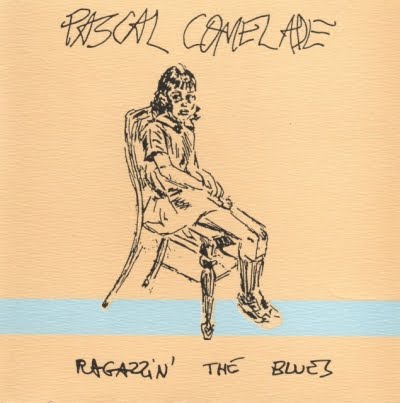
01. Tango del Rosselló 02. Smoke on the Water 03. Egyptian Reggae 04. Let me try 05. Alifib 06. Rue des soeurs noires 07. Your labios as tulips 08. Put a straw under baby 09. C'era una volta il West 10. Love theme from Ben Hur 11. Mexican theme frome Rio Bravo 12. Nocturn, a Joan Salvat-Papasseit 13. Souvenir de Vernet-Les-Bains 14. The sad skinhead 15. Good-bye pork-pie hat 16. Greenlands 17. Abril 74 18. Valse de l'aiguille creuse 19. 4 Roses pour Marie 20. Marcha mora 21. Amarcord 22. I surrender 23. Besame mucho 24. 96 tears 25. Les humeurs
Pascal Paul Vincent Comelade [born June 30, 1955], is a French Catalan musician. Comelade born was in Montpellier, France. After living for several years in Barcelona, he made his first album, Fluence, influenced by electronic music and by the group Heldon. Subsequently, his music has become more acoustic and is characterised by the sounds of toy instruments, used as solo-instruments and as an integral part of the sound of his group, the Bel Canto Orquestra.
Each new album by Pascal Comelade is in itself a bit of an event. The man makes himself rare in France and is much more prolific in Catalonia, where he is considered to be an essential musician. In France, he is seldom mentioned in the media, and, in record shops, his music is often to be found in the film score section, with experimental music or even with world music. The last time he really got the attention of the critics was for his musical show Psicotic Music-Hall in 2002, a tribute to La Bodega Bohemia, a historical cabaret in Barcelona.
"I did a series of concerts in Tokyo in 1991 and played at the French-Japanese Institute. In the sixties, Yves Klein was there, giving French lessons in order to pay for his own judo lessons. My first record for DSA, 'Détail Monochrome' [1984] was - with its title and its cover [a monochrome blue one] - an involuntary tribute to Yves Klein. A second luck was that I found in Tokyo a toy piano from the same manufacturer of the piano which is in the CCAM Studio. With both pianos, I recorded 'Haïkus de pianos' as a special thank you to all the nice Japanese people I met in Tokyo." ~ pc
one of the most innovative french composers unfurls a sublimely short but super sweet set of unlikely covers & strong originals for grand & toy piano :) thoughtful sequencing & continuity demand repeated listening, with only about half the tunes featuring the prominent ticklin of toy ivories. 320 remerciements à l'uploader d'origine