Greece - Koumpania Xalkias. Traditional musicians of Epirus (Grèce - Koumpania Xalkias. Musiciens traditionnels d'Épire) Inedit W 260117, recorded 2000 and 2003, CD released 2004
Greece - Kostas Chatzis - Daoulierika Polygram, Philips 528 479-2, recorded 1982, CD released 1995
01. Sto Latomivo Tou Thanatou (3:39) 02. O Jia-charas (3:05) 03. Simera Pou 'ne Kiriaki (3:27) 04. O Tzo, O Jelastos Traghoudhistis (3:36) 05. Ilie M Archontotselighka (2:20) 06. Ston Ipno Sou Se Filisa (2:52) 07. Trijiro Tichi Ke Siopi (2:59) 08. An Dhen Allaxi Taktiki O Oiranos (2:54) 09. Chasame (3:14) 10. T Aghori T Atsalenio (3:13) 11. Ghalazia I Thalassa (2:00) 12. An Se Rotisoun (3:32) 13. Mi Milas Jia Kaimous (2:21)
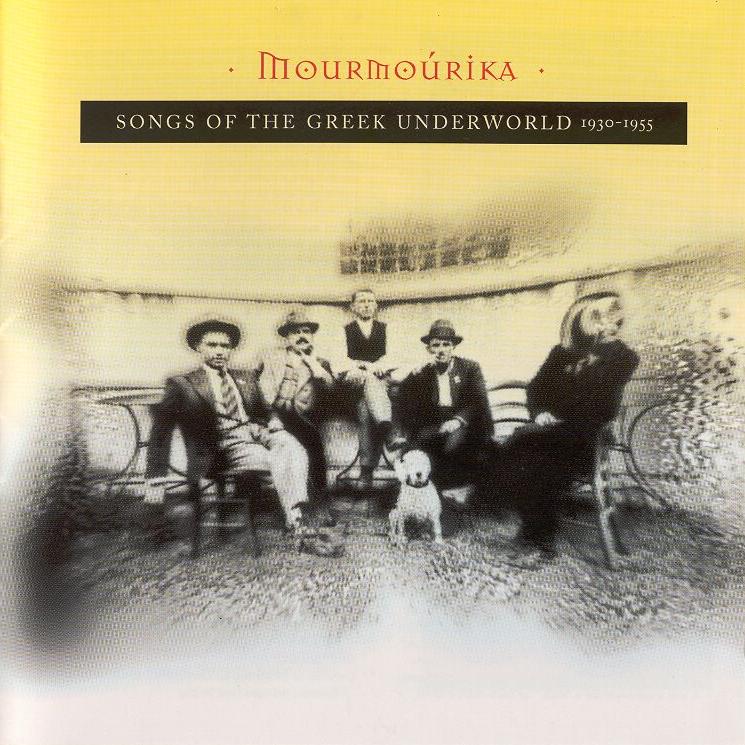
'Rebetika began on the margins of society - specifically in illegal but more or less tolerated hashish cafes - in the ports of Piraeus & Thessaloniki in the mid 1920s, as migrants, seamen and traders from the east [in particular from Turkey & Lebanon] brought their customs with them. This of course coincided with the War in Asia Minor, which displaced millions of individuals from Constantinople & Smyrna, including some of the finest musicians, effectively forcing many of them underground & into the hash dens of Greece. Fortunately, many recorded stellar 78 rpm shellac sides as well.
The songs featured here were made by and for the manges, men & women who scorned straight society & its laws and conventions. A manga never wore a collar or tie, hated the police, smoked dope constantly, & avoided legitimate work whenever possible.
Like its latin cousins [fado & flamenco], rebetika is the blues in another form: musique for the oppressed, the outlaw & the bohemian. It's visceral, rough-edged, percussive, & rhythmically off-kilter; it possesses great melodic variety & charm, & amidst all the passion and pain, it's capable of tenderness too. Accompanying instruments are typically the bouzouki, the lauto and the tsuras, double string lutes of different sizes and sonorities, & the sanduri, a close relation of the north Indian santoor. The themes are central to the chief recreational pursuits of the manges, which were drugs, musique & women, as well as their associated trappings like prison, petty criminality & early death.' ;D
320 χάρη σε κάποια γλυκιά ψυχή, indispensible booklet included :)
01. Kotsarin ekhorevyes ~ You were dancing kotsarin - Chrysanthos 02. Seiranitsa - C. Kuyumtzidis 03. I trigona m’ so rassin ~ My partridge on the mountain - Chrysanthos 04. Do na inume ~ What will become of me - Chrysanthos 05. Kotsarin ~ Kotsarin - K. Mantarlis and Il. Ntolaplis 06. Khoros Serra ~ Serra dance - D. Ioanidis 07. Vai naili emen ~ Alas, poor me - - Chrysanthos 08. T’ astra ki o fegon egrapsan ~ The stars and the moon wrote - Chrysanthos 09. Eki so peran ta rassia ~ There, beyond the mountains - D. Ioanidis 10. Vai ~ Alas - Chrysanthos 11. Anathema sas erima ~ Oh, you unhappy ones - Chrysanthos 12. Anastoro ta palea ~ I remember the past - Chrysanthos
Singers: Chrysanthos and D. Ioanidis
Lyra: C. Kuyumtzidis, Georgulis & D. Ioanidis Zourna: K. Mantarlis and Dauli: Il. Ntolaplis
Pontus or Pontos is a historical Greek designation for a region on the southern coast of the Black Sea, located in modern-day northeastern Turkey. Pontian musique retains elements of both traditional Greek & Celtic melodies. The songs & dances of Turks from the Black Sea region are very similar to Greek Pontic, because turks adopted many elements of pontic and other Black Sea nations cultures long before the Young Turk movement of ethnic cleansing in the early 20th century which displaced & massacred millions of native Pontic peoples, in addition to many other cultures, namely Armenians.
This musique is often fast in tempo and can sometimes be high-pitched. It is played primarily to be danced to, with dance steps substantially different from that of Greek and Turkish dancing. The prime instruments in Pontian musique are the kemenche or lyra which bears resemblance to a fiddle & its Cretan, Cypriot and Thracian counterparts. Also there is the davul, a type of drum & the zurna, a reed instrument.
Chrysanthos Theodoridis [1934 - 2005], frequently only referred to by first name, was born in 1934 in Inoi, Kozani from Pontian parents that were descended from the village Perizkiatzit, in Kars of the Caucasus region. He first began singing as a student in high school in 1951. He sang at the radio stations of Athens with the ensembles of Nikos Papavramidis and Nikos Spanidis from 1951 through 1958. He has collaborated with nearly all the Pontian societies of Athens in all sorts of cultural events. In 1959 he moves to Thessaloniki where he remains until 1975. There he performs together with the veteran and unrepeatable lyra player Gogos Petridis [Chrisanthos had given him the name “the ‘Patriarch’ of the Pontian lyra”]. Chrisanthos together with Gogos, for the first time ever, performed Pontian music in night clubs in Greece, with premiers in Kalamaria and Polihni. He becomes a member of major Pontian societies such as Efxinos Leshi and Faros Pontion, performing at radio programs in Thessaloniki. He collaborated for 13 years with the folklorist Stathis Efstathiadis in radio programming and in Pontian theatrical presentations all over northern Greece.
the cat who sings most of the ditties on this interesting compilation of Pontos tunes is named Crysanthos & he is in fact a man :) the trance inducing fiddle is called a kemenche or lyra. χάρη στην zwan και janas. further
Greece. Epirus - Takoutsia, Musicians of Zagori [Grèce. Épire. Takoutsia, musiciens de Zagori] Gregoris Kapsalis, clarinet Inedit W 260020, recorded 1986, CD released 1990
01. Miroloï - funeral music 02. Ilios - dance 03. Kyra frossini - table song 04. Zagorissio - dance 05. Otan anthissoun ta klaria - table song 06. Arvanitiko - dance
The folk music of Epirus, in northwestern Greece, is indispensable at all festive events. Musicians play at weddings, baptisms and village fairs. The clarinet is the emblematic instrument of Epirus. Its dramatic expression and virtuosic playing are captivating. Recorded in 1986, the Takoutsia ensemble from Zagori village gathered the musicians of the Kapsalis family. Today, Grigoris, considered in Epirus as a clarinet virtuoso, is the only one left. This CD presents a marvellous miroloi, instrumental funeral piece for clarinet, violin and lute, as well as dances and table songs.
the first cut is the deepest, a 22 minute death dirge workout for clarinet, fiddle & lute . i wish it would never end. staggeringly great recording too. compare it to the 78's from the balkans posted previously & it holds its' own. thanx & praise to bakfark for the brillaint rip & entirely too perfect skans.