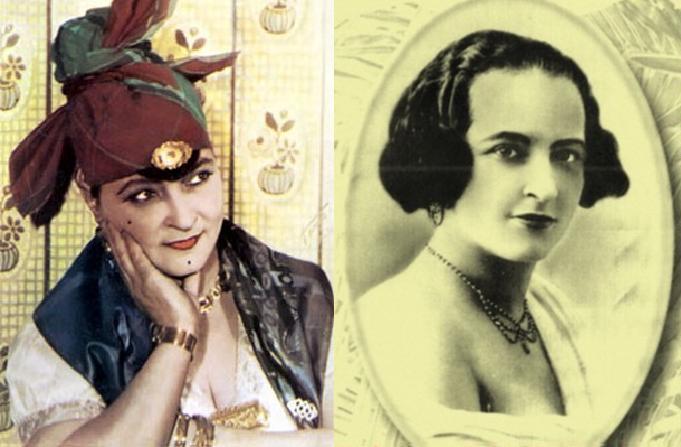
'Lucho Bermúdez y Su Orquesta became famed for their intricate arrangements, mixing big band music from the US with cumbia and porro. Their career spanned from the 1930s through to the 1960s and in cumbia’s hey day in the 1950s the band toured throughout the US and Cuba. This EP features six of their tracks dating back to the 1960s on a triple 7” vinyl. Limited to a 1000 copies.' press
last of the bunch from one of the freshest imprints around, in glorious 192! pure fuggin fire. grab em individually below or spring fer the combo meal. furthermore
01. Heiser Bulgar 3:05 02. Freit Sich, Yiddelach [Be Happy Jews] 3:16 03. Der Terkisher-Bulgar Tanz 3:09 04. Kolomeika [Ukrainian Dance] 2:46 05. Naftule spielt far dem rebin [Naftule plays for the Rabbi] 2:42 06. Nifty's Freilach 2:46 07. Oi tate, s'is gut [Oh daddy, that's good!] 3:04 08. Der Terk in America 2:58 09. Wie bist die gewesen vor Prohibition [Where were you before Prohibition] 3:05 10. Das Teureste in Bukowina [The dearest one in Bukovina] 3:06 11. Der Heisser [Tartar dance] 3:13 12. A hora mit tzibeles [Hora with onions] 3:13 13. Fun Tashlach [Returning from the river] 3:00 14. Leben zol Palestina [Long live Palestine] 3:01 15. Dem Rebin's Chusid [The Rabbi's disciple] 3:01 16. Der Yid in Jerusaleim 3:00 17. Bulgar ala Naftule 3:04 18. Kleine Princessin [Little princess] 2:43 19. Turkishe yalle vey uve 3:18 20. Naftule, shpiel es noch amol [Naftule, play it again] 3:10 21. Araber Tanz 3:04 22. Nifty's eigene [Nifty's own] 2:37 23. Fufzehn yahr fon der heim awek [fifteen years away from home] (Russian Dance) 3:08 24. Vie tsvie is Naftule der driter [Where there are two, Naftule is the third] 3:01 25. Freilicher yontov [Happy holiday] ['Naftule's Own,' #1] 2:41
Naftule Brandwein [1884–1963] was a Jewish clarinetist and influential in klezmer musique. Brandwein was born in Przemyslany, Galicia [now Ukraine], into a family of klezmer musicians, part of the Strettener Hasidic dynasty of Rabbi Yehuda Hirsch Brandwein of Stratyn. His father Peysekhe played violin and was an improvising wedding poet [badkhn]; of his thirteen sons, Moyshe played violin, French horn, and valve trombone, Mendel played piano, Leyzer played drums, and Azriel played cornet; Azriel became Naftule's first music teacher, and had a lasting impact on his playing.
In 1908, Brandwein at the age of nineteen emigrated to the United States where he quickly became a star of the 78 rpm record era, proclaiming himself the 'King of Jewish Music'. Thus, he was considered to be among the first wave of American klezmer artists, those trained in the Old World, as opposed to the second generation who learned their skills in America. Between 1922 and 1927, he cut twenty-four records, first as a member of Abe Schwartz's orchestra, and then as a solo artist after 1923.
Brandwein was known as much for his colorful personality as for his musical talent, often playing with a neon sign, reading 'Naftule Brandwein Orchestra', around his neck, and with his back facing the audience, to conceal his fingering tricks. He also wore plugged-in Christmas lights as part of his costume on several occasions, which once shorted out when he perspired too much, almost electrocuting him. His wild style incorporated not only the influence of Jewish music, but also flourishes of Greek, Turkish, and Gypsy music. His warm and lively playing style would constantly jump up and down the scale and express itself in trills, slides and other ornamentation; he is often contrasted to the other famous klezmer clarinettist of his time, Dave Tarras, who had a more conservative but nonetheless very talented playing style.
Brandwein was notoriously unreliable, unable to read music, & had a reputation as a nasty drunk. He even supposedly played private shows in backrooms for the largely Jewish contract-killing gang, Murder Inc.
His career soured from the mid-1920s onward, as demand for his traditional approach to klezmer music waned; he made his last recording in 1941 and lived out his final years in relative obscurity, playing in the Borscht Belt.
While he did not live to witness the resurgence of interest in klezmer that began in the mid-1970s, his legacy has been revived by a new generation of klezmer musicians, who cite him as a key source of inspiration. The intricate traditions of klezmer music are not well preserved in sheet music, and his recordings are one of the main sources people look to for the 'original' klezmer style.' ~ wiki
didn't know the bit about da Naff slumming it & blowing for hebraic hitmen, what a mensch! also thought Murder Inc was a rap group or something, but now we know the roots. 320 shaloms to the og uploader. r.i.p. Naftule Brandwein 1884-1963
01. Ah! Gade Chabine La - Orchestre Antillais De Alexandre Stellio 02. En Sens Unique S.V.P. - Orchestre Antillais De Alexandre Stellio 03. Rialto! Sens Unique - Orchestre Créole “Kaukira Boys" De C. Martial 04. Mettez I Dehro - Alphonso Et Son Orchestre Typique Antillais 05. Mussieu Dollar - Orchestre Antillais De Alexandre Stellio 06. Mussieu Satan Fache - Orchestre Antillais De Alexandre Stellio 07. Balcon Fleuri - Orchestre “Tagada-Biguine" De Alexandre Stellio 08. Ba Mouin En Ti Bo Dou Dou - Orchestre Créole Delvi 09. Belle Madame - Orchestre Créole Delvi 10. A Si Pare - Don Barreto Et Son Orchestre Cubain 11. Paris Biguine - Orchestre Du Biguine 12. Pani Ti Moun - Sam Castandet Et Son Orchestre Antillais 13. Maladie D'amour - Orchestre De La Boule Blanche 14. Cherie - Orchestre Typique Martiniquais Charlery-Delouche 15. Angeina - Sam Castandet Et Son Orchestre Antillais 16. C'est Beguine - Orchestre De La Boule Blanche 17. Retour Au Pays - Orchestre Del's Jazz Biguine 18. Tes Yeux! - Orchestre Del's Jazz Biguine 19. Belle - Belle - Orchestre Créole Delvi 2:56 20. Pour Mettre Un Peu D'entrain - Orchestre Créole “Kaukira Boys" De C. Martial 21. Quand Meme - Orchestre Du Bal Antillais 3:02 22. Olga - Stellio Et Son Orchestra Créole 2:58 23. Amantine! Amantine! - Orchestre Créole Delvi
'An excellent reissue of 78s first recorded from 1929 to 1951 in France of Franco-Creole Biguines from Martinique from the collection of Dick Spottswood. This compact disque issue contains a generous 23 selections [9 more than the 1988 LP issue]. There is a similarity to some of the calypso and New Orleans jazz of the same era, but Martinique has its own sound, rooted in the rhythms of its indigenous dance, the biguine. This music was recorded by Martiniquans living in Paris on major labels of the era. The premier musicians were Alexandre Stellio on clarinet, Ernest Leardée on violin, Orphelien on percussion & trombonist Archange St. Hillaire who performed together and fronted their own groups. This is a pleasing collection of exciting Caribbean music [my mother, who grew up dancing to beguines [Spanish spelling] in her native Virgin Islands, loves it too!] that never has failed to lift my spirits.' ~ kerry blech
such perfect, singular summer listening. nothing else in the world sounds quite like this. Lionel Belasco comes to mind but the proceedings here are far more unhinged & free. one of a kind. 320 thx to espilos.
01. Maladie d'amour 02. C'est biguine 03. Ti femme ta la 04. Mabillage décollage 05. Femme qui dou 06. Petite fleur fanée 07. Calalou 08. Moin belle ! 09. Maman...la grève barré moin (oué, oué, oué) 10. Ti bourrique assou la l'vée 11. Ah ! gadé yo ché 12. Agalou 13. A si paré 14. L'échelle poule 15. Ninon 16. Zafé co ida 17. Mamée la créole 18. Paris Biguine 19. Celestin roi diable 20. L'homme à lunettes
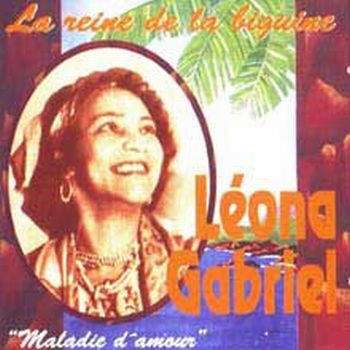
'Leona Gabriel was a Martinican biguine singer [1891-1971] born in Rivière-Pilote, Martinique. Daughter of a white creole she grew up in Martinique, going to secretarial school in Cayenne, Guyana at age 14, going on to work as a secretary for the Lesseps company during the building of the Panama Canal. After returning for a period to Martinique she moved to Paris in 1920. In France she began singing and recording with the orchestra of pianist Alexandre Stellio under the stage name of Mademoiselle Estrella. Gabriel returned to Martinique in the 1940s, becoming a radio presenter, a career which lasted over 30 years. She continued recording until the 1960s.' plus
hardly any takers on 10cc but that's all good, hopefully we scared off any uptite nonbelievers. here goes the reigning queen of biguine & one of the better songbirds, in any tongue. once again, haven't the foggiest notion what the 'graphic design division' of pharaon records musta been smokin when they green-lighted that garish cover art, but twas a labour of love coalescing those two old-school photos into a more optically inviting alternative for the uninitiated.
first heard this chanteuse & her wildly talented orchestre on the equally essential 'Hot Womens Singers from the Torrid Regions' compilation curated/ illustarted by R. Crumb. this one originally dropped by the unstoppable constantin59000 somewheres out thar in the more obscure realms [to yanks, anyway] of syberspace. thanks to toro y loco for the hot tip
01. Vitori May Your Mother Be Blessed 02. I'll Love You as Long as I Live 03. I'll Take a Gun and Go Hunting 04. Pogonishte Permetare 05. Little Leaf 06. Our Bride in the Dance 07. Lokum With Sugar 08. Dance of Tirana 09. Oh Dear, Bad Raki 10. Old Women's Dance 11. The Many Petalled Rose/O Basil 12. The Permet Bagpipe 13. Emigration Song-Weep, Maro 14. The Face Smiles
Laver Bariu is arguably the best known Albanian clarinetist of the last half century and an important figure in the development of urban folk music in the south-eastern Albanian region of Toskëria. Born in the southern town of Përmet, Laver was exposed to Përmeti folk music traditions from a young age via his father Bari Nurka, a well known local singer and llautë player. As a youngster he resorted to making his own instruments from any handy materials that he could find and his keenness and passion for music did not go unnoticed by his father. In 1935 the family moved to the eastern town of Korçë, at that time a vibrant and important centre of Tosk Albanian music and culture. Here he mingled with a far wider selection of singers and musicians and gained his first experience of playing in different groups and ensembles.
By the time his family returned to Përmet in 1944, Laver was ready to begin a full-time career as a musician and band leader. He played llautë with Vangjel Leskoviku's ensemble for a year or so before forming his own ensemble. Despite inevitable changes in personnel this ensemble remained active for the next six decades. Along with the Lela Family, Laver Bariu was largely responsible for promoting the Përmet style of urban folk music to the point where it has almost come to symbolise Tosk folk music in general.
He has been recorded several times by Radio Tirana and has also appeared on Albanian television. Foreign engagements were understandably restricted but following the collapse of Communism Laver Bariu was able to record a couple of CDs for labels based outside of Albania, one of which - Songs From the City of Roses - was widely available in the West, having been recorded in Përmet by Ben Mandelson in 1994.
There are two central points for this recording, each inseparable yet distinct. One is the instrumental music, which has echoes of the Balkans, Greece, southern Italy, and the Middle East. This is the music of clarinetist Laver Bariu and his ensemble of accordion, reeds, and percussion. The second element is the singing, a true polyphonic style, with multiple singers moving freely and apart above a single droning voice. The combination is quite unique, with instruments and voices improvising and mimicking one another, creating complex and rich sounds. There are moments where the drone of the accordion and the wail of the clarinet create a soaring, modern sound, only to be pulled down to rich earthiness by the voices. Recorded by the Globestyle team in 1994, these live-to-digital recordings are wonderful documents of a remarkable musique. Laver Bariu was appointed an 'Artist of Merit' in 1979.
C.N.R.S.-Musée de l'homme, LDX 274897 LE CHANT DU MONDE, 1988 Enregistrement Bernard Lortat-Jacob en collaboration avec Beniamen Kruta 1983-1988
01 What Have Ianina's Eyes Seen ~ Albanian Men's group from Vlorë 02 Legend Of The Walled-In Woman ~ Albanian Men's group from Vlorë 03 At The Peshkëpi Pass ~ Men's Choir from Tepelene 04 Song for Odriçan ~ Men's Choir from Tosk 05 For Freedom And The Flag ~ Men's Choir from Tosk 06 By The Riverside ~ Men's choir from Tosk 07 May You Live As Long As This Earth ~ Choir from Gjirokaster 08 Konofat's Song ~ Women's Choir from Permet 09 Song Of Emigration ~ Women's Choir from Permet 10 Kaba ~ Gypsy musicians from Tosk 11 Kaba preceding a dance ~ Gypsy musicians from Tosk 12 Carter Leading The Caravan ~ Women's Choir from Permet
'Until very recent times the folk music of Albania has remained, even to the specialists, more obscure than the songs of the Eskimos or the highlanders of New Guinea" (Lloyd 1968). So wrote British folklorist A. L. Lloyd in 1968. Twenty years later, scholars outside Albania know little more about that country's music as there continues to be a scarcity of both recordings and writings in languages other than Albanian. The release on the Chant du Monde label of a compilation devoted entirely to music from southern Albania should therefore attract considerable interest among ethnomusicologists. This is the first scholarly release of vocal music from Albania to be issued since Lloyd's recording on Topic (1966). It includes ten examples of polyphonic singing, as well as two instrumental improvisations, all recorded with excellent clarity and balance by Bernard Lortat-Jacob and colleagues from the Centre National de la Recherche Scientifique and the Ministere des Relations Extkrieures of France. All performers had participated in 1983 in the National Folkloric Festival in the city of Gjirokaster and so may be assumed to be among the most highly regarded singers and instrumentalists within their districts. Their highly polished, often spectacular renditions represent something close to an ideal for the styles of their respective areas. Albanians distinguish two major subdivisions among themselves: Ghegs in the north of the country, Tosks in the south. While most Gheg music is monophonic, the singing and instrumental music of Tosk communities is in a variety of polyphonic styles. This release focuses specifically on Tosk polyphony, presenting songs in two out of three of the major regional styles. One of these, known as the 'Lab' style [Nos. 1, 2, 3, and 7], is found in the districts of Vlore, Tepelene, Gjirokaster, and Sarande, and it generally features two to three soloists plus a syllabic drone sung by a group. Songs are homophonic in texture and closely resemble those of Greeks from the Pogoni district of Epirus. In contrast, the 'Tosk' style [Nos. 4, 5, 6, 8, 9, and 10] features two soloists whose lines overlap and interweave above a choral drone sung to a vowel sound. This style is found in the region extending north of the Lab region to the river Shkumbin, as well as among Tosks.
Yugoslavia, and is shared with some Slavic and AromAn communities in the same region.' The two instrumental selections [Nos. 11 and 12] are also from the 'Tosk' region. They are both of the genre kaba,a type of nonmetric improvisation paralleling the Epirut Greek 'miroloi' that is performed most often by Gypsy musicians. Lamentably the three women's songs are all from the same area within the 'Tosk' region, and they are in much the same style. The disc therefore provides a much better introduction to the range of men's singing styles in southern Albania than of women's' ~ Ethnomusicology: Journal of the Society for Ethnomusicology no. 34 ed. 3 pg. 488
Greece. Epirus - Takoutsia, Musicians of Zagori [Grèce. Épire. Takoutsia, musiciens de Zagori] Gregoris Kapsalis, clarinet Inedit W 260020, recorded 1986, CD released 1990
01. Miroloï - funeral music 02. Ilios - dance 03. Kyra frossini - table song 04. Zagorissio - dance 05. Otan anthissoun ta klaria - table song 06. Arvanitiko - dance
The folk music of Epirus, in northwestern Greece, is indispensable at all festive events. Musicians play at weddings, baptisms and village fairs. The clarinet is the emblematic instrument of Epirus. Its dramatic expression and virtuosic playing are captivating. Recorded in 1986, the Takoutsia ensemble from Zagori village gathered the musicians of the Kapsalis family. Today, Grigoris, considered in Epirus as a clarinet virtuoso, is the only one left. This CD presents a marvellous miroloi, instrumental funeral piece for clarinet, violin and lute, as well as dances and table songs.
the first cut is the deepest, a 22 minute death dirge workout for clarinet, fiddle & lute . i wish it would never end. staggeringly great recording too. compare it to the 78's from the balkans posted previously & it holds its' own. thanx & praise to bakfark for the brillaint rip & entirely too perfect skans.