1. Nang Soubane Vongath & Sengphet Souryavongxay - Lam saravane 2. Nuothong Phimvilayphone - Nam phat khay 3. Khangdeuk 4. Khene 5. Mengphou tom dokmay 6. Pao sat
The vocal art lam [the dominant form in Laos] and the khen mouth organ [the national instrument], performed here by exceptional musicians. Refined classical music popular for its lively swing
one of the freshest laotian jams around, particularly the majestic mouth organ dronery of the resplendent nuothong phimvilayphone. owlwaze thought phimvilayphone would make a sweet name fer a record label, but anyway, we loves this ish. made possible by a joint effort from friendlies miguel & arvind
01 - Trailers - Ali San 02 - Mike Ibrahim & The Nite Walkers - Chock Chock Kundong 03 - D'4 Ever - Mungkir Janji 04 - Kassim Slamat & The Swallows - Mak Itty, Mai Illa 05 - Rosnah & The Siglap Five - Gembira Ria 06 - Les Kafilas - Ikan Todak 07 - The Dynamics - Used to Be 08 - Ronnie Ong - Buttons and Bows 09 - Fox - [Untitled] 10 - The Swallows - Bunga Berachnin 11 - The Keyboys - [Untitled] 12 - Trailers - I'm Ready Now 13 - Naomi & The Boys - Bad Loser 14 - J. Ismail & 'D' Irama - Lupakan Aku 15 - Kassim Slamat & The Swallows - Nga Lompak a Go Go 16 - The Quests - I'll Be Your Man 17 - October Cherries - Barabajagal 18 - The Keyboys - [Untitled] 19 - The Quests - Hur Pi Tzu Shau Hsiang 20 - Ismail Haron & The Guys - Bersedia 21 - Mike Ibrahim & The Nite Walkers - Senyum Selalu 22 - The Dynamics - I Wish You Would 23 - Kassim Slamat & The Swallows - Lek, Paju Molle 24 - The Antartics - Runaway 25 - Pietro Attilla & The Warlocks - Goodbye 26 - King Drummer - I Am a Drummer
'Steam Kodok is an above average collection of 'Ultrarities From the 60's Singapore and South-East Asia Underground'. It might be too diverse for those interested in totally hip sounding 1960s music, but that diversity is actually one of the things which lends this compilation a bit more excitement than the standard ones. The fact there is an excellent set of liner notes helps a lot to create a wonderful and educational musical experience.
It's already well known just how pervasive the various 1960s brands of music were thanks to the myriad of compilations delving into the furthest corners of the world. It's always exciting to look, see and hear these foreign brands of rock-n-roll, r&b, pop and psych, and see how they translate and interpret the various sounds of the day.
Steam Kodok worked for me in portraying a highly diverse and exciting scene of 1960s pop music in Singapore [& the surrounding area]. Found in this collection are sides from acts like D'4 Ever, Les Kalifas, Mike Ibrahim and the Nite Walkers, Rosnah and The Siglap Five, Kassim Slamat and the Swallows, Ronnie Ong, October Cherries, The Quests, Naomi and The Boys, Ismail Haron and The Guys, The Dynamics and The Antarctics. Don't be afraid by the mysterious names; this compilation rocks with all sorts of fuzzed out, soul folk rock, surf girl group sounds & some of it is even in English.
For me the compilation was the most exciting when it had some great fuzz, some great girls, or was at it's most bizarre. Mungkir Janji by D'4 Ever mixes The Yardbirds' riff from 'For Your Love' with a haunting male vocal lead, an upbeat rhythm and some subtle fuzz. Mike Ibrahim and the Nite Walkers have a jazzy upbeat frat rocker in the song Chock Chock Kundong, which I'm sure would inspire Los Samplers. The most bizarre and intriguing moment in the compilation comes from Fox, with a song title in an unprintable language - which has some haunting cat howls throughout the moody, sinister tune. Ronnie Ong's version of Buttons and Bows works quite well, actually [& is sung in English], thanks to some amazing fuzz guitars. The capping moment is the tremendous version of Donovan's 'Barabajagal' by October Cherries, one of my favorite fuzzy moments on this collection. Naomi & The Boys' song Bad Loser [a Peter Thomas song!] has a wonderful sweet female lead singer [who sings in English] with combination fuzz rock / toy piano sounds backing her up. This song was a nice surprise and made me want to hear more by Naomi & The Boys.
Steam Kodok is a really great collection, opening up a door to a side of music I had never heard before. And like compilations like the ones with the Japanese GS bands, The French Yeye, and the Cambodian Rocks compilations, I found this compilation to be an amazing and exciting listen.' ~ patrick
that review works fer me, but my fav cut has gotta be the quests 'herpes sue shawshank'. here goeth the polycarb coaster version featuring 9 additional numbers. a most enjoyable listen, 320 er FLACK
A1. Boxing Song [Taloong] เพลงมวย [Pleng Muay] A2. Su Ki Ya Ki [Sloopy] สุกียากี้ [Sukiyaki] A3. Klong Yoaw [Merenge] เถิดเทิง [Thoet Thoeng] A4. Fountian [Sloopy] ฟ้อนเทียน [Fon Thian] or 'Candle Dance' A5. Cho Cho Chan [Twist] โจโจ้ซัง [Cho Cho Sang] or 'Cho Cho San' A6. Rose Rose I Love You [A-Go-Go] ฉันรักกุหลาบ [Chan Rak Kulap]
B1. Your Cheatin Heart [Cha-Cha-Chai] ยัวร์ชิตดิ้นฮารต์ [Yuar Chit Din Hart] B2. Flower Moon [Quickstep] บุปผาเพ็ญจันทร์ [Buppha Phenchan] B3. Kraw Taloong [Graw กราวตลุง [Krao Talung] B4. Arabian Song [Guaracha] เพลงอาหรับ (Pleng Arab] B5. Asava Leela [Guaracha] อัศวลีลา [Atsawalila] B6. Jean Ram Pad [A-Go-Go] จีนรำพัด [Chin Ram Phat] or 'Chinese Fan Dance'
'progressive classical music' [shadow prayuk] international album, new & special this year... a melodious sampling of the most excellent songs, packed in together on this record.'
another 'glassic' document of farfisa-laden thai shadow toons [including a hank williams cover] with transliterations by the inimitable peter doolan of มนต์รักเพลงไทย fame. where the english is 'broken', i left it as such, in the interest of historical accuracy & good humour, but more astute meanings might live there to the right of the tracklist, following the anglicized thai phoenetics. this rip was harvested piece-meal from the recently established archive of southeast asian music, who definitely deserve yer rapt attention. 320 ความกตัญญู to 'em. evenfurtherstill
had a couple requests fer these encroyable recordings specifically & although i was only just gifted em this morning, can readily attest to how superb they sound. best believe, the richness of laotian musical kulture remains in full flower. merci encore une fois à op. review
Ensemble De Gongs / The Gong Ensemble/ Čing Hrap [Villageois De Plei Rơngol]
1-3. Musique for the sacrifice to the Spirits of the Community House [Ngă Yang Rông] 4-7. Musique De Funérailles [Arang Djai] 13:38 8-9. Music Of Celebration 6:04
10. Puih H'Rai - Lullaby [Tơlơi Alum Ană] 2:05 11-12. Jet, Jing, Yuan - Bamboo Xylophone [Đĭng Kǒk] 7:28 13-14. Alik - Mouth-Resonated Fiddle [Kơni] 6:46 15-16. Alik - Two-String Stick Zither [Brǒ] 6:07 17. Rơchom Tih - Eleven-String Stick Zither [Ting Ning] 2:30 18. Rơchom Tih - Love Song, Accompanied On The Zither 3:38 19. Rơchom Tih - Lullaby, Accompanied On The Zither 3:11 20. Baih - Multi-Pipe Aerophone [Đĭng Dek]
Recorded By, Liner Notes, Photography - Patrick Kersalé, 1997-98, Syrinx Academy
Tradition has it that the Jörai, one of Vietnam's 54 ethnic groups, came into being after a great flood, from which their ancestor was saved by taking refuge in a large drum. Ever since then they have used the drum to accompagny their extraordinary gong ensembles. The same repertoire is performed by the men on the bamboo xylophone.
The recordings presented here were made in April 1997 and March 1998 in the provinces of Gia Lai and Kontum, home of the Jörai sub-groups H'Grông and Hrap. Includes a 28-page booklet in French and English.
if you enjoyed the previous recordings of Vietnamese & Laotian sacrificial, celebratory & banishment gong cycles recorded by Patrick Kersalé, you will likely need to grab this one too, as i believe they stem from the same field trip[s]. in addition to gongs, this correction incrudes several different varieties of instrument, like the Trautman-esque emanations conjured from the kơni or mouth-resonated fiddle [see cover]. impeccably recorded & annotated, Kersalé sets a kind of gold standard for what an 'ethnomusicological' document should be. thoroughly potent. 320 thanks to Ambrose Bierce of WeLoveMusic fame
Kong Nay. A Cambodian bard - singing and lute chapey [Kong Nay. Un barde cambodgien - Chant et luth chapey] Inedit W 260112, recorded 1997, CD released 2003
'A Cambodian Bard documents the work of Kong Nay, a traditional musician of Khmer extraction. He was in his early fifties when this session was recorded in a studio in Phnom Penh back in February 1997. Playing the chapey, a traditional lute with a very long neck and three strings [although Kong uses a custom two-string version], he sings about the everyday life of Cambodians and memories from the regime of the Khmer Rouge. The authentic bard songs all use a similar main theme over which Kong embroiders his own variations and permutations. Voice and lute answer each other in a dialogue where narrative and decorative voices are constantly interchanging their roles. Some pieces adopt a more personal style where the artist borrows elements from Khmer classical music. There, the lute doesn't stop playing and the music taps into a kind of earthly ethos strongly resembling the blues. This comparison is reinforced by the choice of topics. In 'Thkol Loan Nauv Khet Svay Rieng' [Thunder on Svay Rieng], Kong enumerates the agricultural chores of every season while dreaming of the places where the products of the labor will be enjoyed, echoing some American cotton field songs. Despite the language barrier and the highly Asian inflections and ornaments of the melodies, this music speaks to the soul in a way that is far closer to Leadbelly or early John Lee Hooker than other traditional music from the Far East. The 28-page booklet includes translations of the Cambodian lyrics in English and French and an interview with Kong Nay from 2001, also in both languages.' ~ François Couture, AMG
01 Dance of the Horse and Mang - Dai Nhac Ensemble 03:59 02 Dance of the Phoenix - Ensemble 03:28 03 "Mounting the Esplanade" - Court Music Ensemble02:00 04 Ten "Royal" Pieces - Nha Nhac Ensemble 09:20 05 Mad Woman's Song (traditional theater) - Traditional Theater 08:02 06 The Five "Drums of Thunder" - Dai Nhac Ensemble 03:06 07 Recitation of Buddhist prayers - The Venerable Hieu Quang, Pho Quang, Mat Nguyen 08 Buddhist Chant - The Venerable Hieu Quang, Pho Quang, Mat Nguyen 03:37 09 Monochord Solo - Nguyen Huu Ba 06:01 10 "Journey Overland" - Entertainment Music Ensemble 06:15 11 "Landscape of Four Generations" - Entertainment Music Ensemble 05:54
Vietnam II: CD 2 BM 30 L 2024 Entertainment, Modern Theatrical, Ritual & Religious Music of South Viet Nam
01 Bai Trong Lay and Thet - Ensemble 02:53 02 Buddhist Chants and Prayers - Priest and ensemble 04:32 03 Bai Ha - Ensemble 04:56 04 "Respectful Invitation to the Goddess of the West" - Ensemble 08:40 05 Xang Xe - Ensemble 04:30 06 Rao Nam, Hoi Ai-Oan - Vinh Bao 03:33 07 Binh Ban - Ensemble 03:48 08 "The Wind Blows and Bends the Weeping Willow" - Mrs. Mong Trung and Tran Van Khe 09 "The Four Generations" - Miss Bach Hue and ensemble 04:12 10 "The Beautiful Tay Thi" - Ensemble 03:36 11 Longing for the Past - Miss Bach Hue and ensemble 04:15
'Geographically, Vietnam is part of the Far East and at the same time of Southeast Asia. Musically, it belongs to the great family of Chinese tradition that includes, apart from China itself, Japan, Korea and Mongolia. Owing to its geographical position, Vietnam came in contact with Champa [a folk that once inhabited the present-day Vietnamese coast] which had been influenced by Indian civilization. Consequently, the Vietnamese people assimilated the two musics, Chinese and Indian, and asserted their individuality in creating original instruments. The first disc in this 2-CD set focuses on the music of Central Vietnam [the musique of Hue], while the second is devoted to the music of South Vietnam.' ~ liner notes
another Rounder re-edition from the Anthology of World Music series on the Bärenreiter-Musicaphon imprint. two lp's from the late 60's were resurrected for this publication, but i believe even this re-ish has gone out of print. we can thank both hamorakas & janas for bringing it bach from the brink. 320 rip w/ skans
press hype: 'Filmed throughout Southeast Asia by Robert Millis between 2002-2004, My Friend Rain is an abstract homage to the endless monsoon cycles of rebirth and destruction. Dreamy musical segments, fleeting glimpses, odd sounds, temple shrines, tropical backdrops, decay, death, languid afternoon rains, and mysterious celebratory events take the viewer from soaked mornings in the lowlands of the Irrawaddy delta to humid nights on the streets of Isan province. Two tracks originally released on Millis’ Leaf Music, Drunks, Distant Drums CD from 2002 can now be witnessed for the first time in this film: an amazing elephant mahout playing a song on a leaf with his mouth and a Burmese marionette orchestra musician performing expertly on tuned drums. The overall experience is an impressionistic collage of sight and sound captured live and in the moment on location in Laos, Thailand, Cambodia and Myanmar. Along with the DVD, package includes a bonus CD with the film’s soundtrack of traditional and popular music culled from live performance, cassette and LP archives. Some of the soundtrack highlights: a gorgeous Thai Luk Thung track by Waiphot Phetsuphan, a classic Khmer performance by Pan Ron, one of the Queens of Cambodian music, and an epic Burmese pop rendition of the Bee Gee’s How Do You Mend a Broken Heart, alongside folk performers, street musicians and a traditional Burmese orchestra' perch merch
: download link removed by kind request :
don't get too happy. this aint a transfer of the dvd, but merely the accompanying soundtrack cd, which we fancy quite a bit. 320 fanx to grasprelease & his hookups for the hookup. if ya have access to the visual portion of this set, kindly 'hook it up' in the comments or sumfing, okeh? :)
Recrdings by Randy Raine-Reusch trax 1-8 recorded in 89 on a Sony Walkman in Tasau Padan's home in Sarawak, Malaysia trax 8-9 recorded in 97 at the WOMEX fest in France
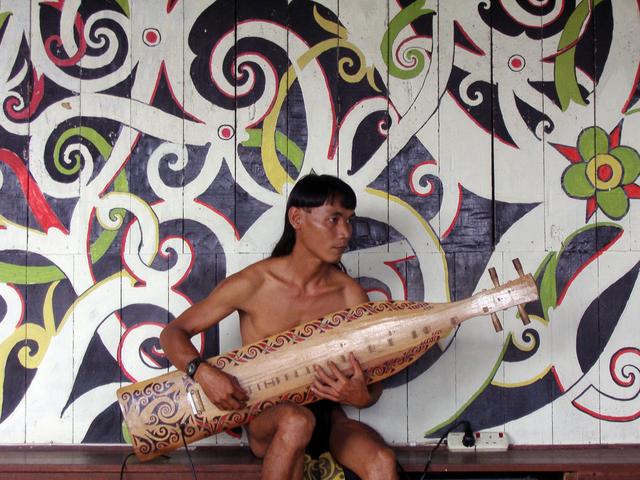
A rare recording of the beautifully lyrical traditional music of the sape, a boat lute of Northern Borneo, by master musicians. Recorded in Kuching Sarawak, this is the only recording of this master performer. 320 thanks to Rachelle
Lemhadong Art Collective Members: Fingguy Flang, Tunding Maguan, Luming Tuan, Lundi Langon, Minga Maguan, Mina Tungan, Melun Malungal, Neyet Mindal, Blina Tuhitum, Mundi Baai, Anay Maguan, Asita Ralla
'The Tboli are an Indigenous Cultural Community of the Philippines. They live in small mountains surrounding Lake Sebu, in the Cotabato Cordillera, Southern Mindanao. Their territory went through spectacular transformations during the past decades. Until the 1950's, this region was entirely forested. Its inhabitants lived in small hamlets surrounded by temporary gardens, in the heart of the forest which fed them. Their fine knowledge of the vegetal and animal world impregnated their imaginary and their arts.
The massive immigration of farmers from other regions of the Philippines disrupted the territory. This sudden transition was detrimental to the Tboli, many of whom lost all access to land and now live in utter precariousness. The musicians of Lemhadong are all Tboli, and it is the Tboli cultural heritage they wish to share through this record project.
Tudbulul, the mythological hero, lived alone with his family in a forest site called Lemhadong. One day, he organized a concert in which he gathered all the known music instruments and played them one after the others with his sisters. It attracted many inhabitants of the forest, who were delighted and decided to stay and live together with Tudbulul : this is how was founded the Tboli nation.
The musicians and artisans of the Lemhadong collective all reside in the village of Dekolon, on a hill overlooking Lake Sebu. They don't know how to read nor write, and survive day by day through small jobs. They learned music by observing the adults when they were children. No-one ever taught them, except sometimes a fairy appearing in their dreams. As a matter-of-fact, Tudbulul's concert didn't gather only humans : the fairies, custodians of the forest, were also attracted, and they were so enthralled by music that since then, they have been helping learning musicians by appearing in their dreams to encourage them. According to the Lemhadong artists, their musicianship has a lot to do with these wild fairies fond of music.
The general esthetics of Tboli music is vibrant, light and quick, with melodic patterns repeated like the geometric patterns used in the art of weaving. The many instruments are always played solo. The combination of several instruments as well as the association of voice and music are almost absent. The main instruments are the hegelung lute, the tubular zither sludoy and the klintang and smaggi metallophones, surrounded by a variety of small instruments : flutes, jaw harps & reedpipes. Though the instruments are played by many, singing - half declaimed and always as a soloist - is only practiced by recognized authors and performers.
Tboli music displays a large palette of sounds which follow each other without ever mingling, and Lemhadong's album reflects this particularity by taking the shape of a rich sound itinerary moving from one sound to another. The record Women artists of Lake Sebu is a sound portrait of the Lemhadong collective, and more generally the ecologic, social, musical and imaginary world of the Tboli. The soundwork takes the shape of a continuous mix associating music and sounds of the daily environment. To preserve authenticity, the recordings were made entirely on location, in the bamboo houses, the gardens and other places linked to the practice of music.
Through the album, we can hear the boat gliding on the lake, the lushness of insects, the gallop of the horse, the laughters of guests at a party, and many other snapshots plunging the listener at the heart of the Tboli world, making it possible to grasp the music in the context from which it came out.' ~ altamira
Recording, mixing, text and photographies : Boris Lelong
this one is a stunner. the recordings are lush & resonant with a variety of indigenous flora & fauna permeating every single traque. superb in every imaginable way. we can thank this guy for these adorable sonic portraits of everyday livin', tboli style
Vol.1 - CAP 21406, recorded and released 1991 Vol.2 - The City of Hue - CAP 21463, recorded 1994, CD released 1995 Vol.3 - Ethnic Minorities - CAP 21479, recorded 1994, CD released 1995 Vol.4 - The Artistry of Kim Sinh, guitar - CAP 21673, recorded 2001, CD released 2003 Vol.5 - Minorities from Central Highland & Coast - CAP 21674, rec. 2001, CD released 2003
Inedit - North Vietnam - The Ca Tru Tradition (Nord Viet Nam - Le Ca Trù) Ca Tru Thai Ha Ensemble from Hanoi Inedit W 260070. Recorded 1995, CD released 1996
Ca tru is an ancient and highly developed genre of chamber music featuring female vocalists. It started off as being a form of entertainment for the royal court in northern Vietnam. For much of its history, it was associated with a geisha-like form of entertainment.
Ca trù literally translates as "tally card songs." This refers to the bamboo cards men bought when they visited ca trù inns, where this music was most often performed in the past. Men would give the bamboo cards they purchased to the woman of choice after her performance, and she would collect money based upon how many cards she was given.
Scholar-bureaucrats and other members of the elite most enjoyed this genre. They often visited these inns to be entertained by the talented young women, who did not only sing, but with their knowledge of poetry and the arts could strike up a witty conversation along with serving food and drink. Ca trù involves only 3 performers: the female vocalist, a lute player and a spectator (who also takes part in the performance).
The female singer provides the vocals whilst playing her small wooden sticks beaten on a small bamboo platform. She is accompanied by a man who plays a long-necked, 3-string lute used almost exclusively for the ca trù genre. Last is the spectator (often a scholar or connoisseur of the art) who strikes a praise drum in praise or disapproval of the singer's performance, usually with every passage of the song. The way in which he strikes the drum shows whether he likes or dislikes the performance, but he always does it according to the beat provided by the vocalists' percussion.
New observers to the art often comment on how strikingly odd the vocal technique sounds, but it is the vocals themselves that are essential in defining ca trù.
Ca tru was inscribed on the list of Intangible Cultural Heritage in need of Urgent Safeguarding in 2009.
Tracklist: 01. Thét nhac 02. Guri thu 03. Sam huê tinh 04. Hat noi 05. Ba muoi sau giong 06 .Bac phan - Muou - Hat noi 07. Hat giai - Hat ru 08. Lay Kieu 09. Ty ba hanh
01. Dan Bau Vietnam: Rider In The Sky 3:40 02. Ly Ngua O: Saigon Oi 7:26 03. Dead Men's Orchestra: Totencombo 4:16 04. Tanh Nam "Teu" 11: Bonanza (Bat Ghen) 0:51 05. Eo Sinh & Namh Hao: Vc Love Song 4:01 06. Thu Hien: Hoa Cau 4:03 07. Tanh Nam "Teu" 11: Lucky Luke (Bat Ghen) 0:55 08. Santana V: Totensamba 1:28 09. VC Hooker: Vc's Blues 3:38 10. SRV Opera Singers: Barbecue-Songs 2:45 11. Janiv: Totblues 1:08 12. Anh Sang: Totensong 3:23 13. Anh Sang: One Ship Will Come 3:49 14. Dan Bau Vietnam: Chinese Song 2:48 15. Ferry Duo: Fnl's Blues 2:52 16. Dylan Tanh: Balanced Voice Songs 3:30 17. Ly Ngua O: Vo Chong Lam Bieng 3:07 18. Clint Viet: Mot Nam Do/Dollar-Hand 3:05 19. Thanh Tam: Cung Dan Dat Nuoc 3:32 20. Thu Hien: Rang Tram Bau 5:20 21. Dan Bau Vietnam: Rider In The Sky - Live 5:25
'Hó! Roady Music From Vietnam is a stunning document, celebration even, of Saigon´s resilient street life 20 years after the US´s defeat. The appeal of American pop, most likely heard leaking out of squalid girlie bars, is evident in its impact on these electric guitar wielding grannie buskers with backpack amps, bar singers, Vietblues players, hustlers, funeral drum´n´bass combos and bizarre US folk-ethnic fusioneers, taped amid screeching traffic noise, cop whistles, barking hawkers and insect-buzzing heat. Just as the jungle reclaimed detritus left behind by G.I.s, so these musicians have remolded fading American melodies around Vietnamese templates, transforming them into vivid, shocking pink Vietpop and street music. And these slithering brass tunings and clattering percussion of Saigon´s funeral combos are truly worth dying for.' - midheaven
that pirty much sums it. a thoroughly encroyable correction of street musique from vietnam. after awhile every single song is good. 320 hugs to hans
A1. Độc tấu Hạ Uy Di - Thanh Kim B1. Độc tấu lục huyền cầm - Văn Vĩ
Hạ Uy Di is basically the Vietnamese version of Hawaiian style slide guitar & is traditionally played in a solo fashion. here we have what i believe to be a split 45 from two giants of old-school Độc Tấu Hạ Uy Di; Thanh Kim & Van Vi. couldn't find any interwebular info on the former but i believe this was released in the 60s. if'n ya got the skinny, don't hesitate to illuminate. 320 cảm ơn to janas
this might give you some idea of what we're werkin with
01. Plearn Promdan – Farang Zeang Zeang Bong Fai (00:34) 02. Plearn Promdan – Koy Yung Mai Por (I Still Don’t Have Enough) (02:41) 03. Poom Puwarin – Tai Por Karm Bar (Die Because Of The Chubbiness) (02:51) 04. Thawal Pukathorn – Pu Ying Yang Nong (Women Like You) (03:07) 05. Saksiam Petch – Chompu – Jeb Jeb Sab Sab (Hurt Hurt Sting Sting) (02:43) 06. Kangwanprai Lamsing – Chan Yak Kah Mia (I Want To Kill My Wife) (02:53) 07. Rungpetch Lamsing – Ban Nork Dee Nae (Country Side Is Sure Good) (03:16) 08. Thepporn Petch – Ubon – Jon Thae Nor (So Poor) (02:43) 09. Praiwan Lukpetch – Mai Aem Ruk (Not Enough Love) (02:47) 10. Samai Onwong – Nae Nae Ron Ron (Cold Cold Hot Hot) (02:42) 11. Rungfah Puping – Puyai Lee Santana (Cheif Lee Santana) (03:13) 12. Suang Santi – Dub Fai Kui Gun (Turn Off The Light, Let’s Talk) (04:03) 13. Thepporn Petch – Ubon – Par Gun Koh (Let’s Get On) (02:53) 14. Noppadol Duangporn – Yaak (Want) (03:19) 15. Dae Bandon – Mae Jom Kalon (Slippery Women) (03:05) 16. Petch Pohtaram – Nong Jeoy (Sis Jeoy) (02:32) 17. Sornpetch Pinyo – Luek Rao Dume Nom (Quit Alcohol, Drink Milk) (02:27) 18. Samai Onwong – Ruk Thung Na (Love The Rice Fidle) (03:09)
'This is the third installment from the Thai Funk series & perhaps the best yet. Lavishly packaged in a CD housed in a fine bamboo weave from Phanat Nikhom, with a large groovy poster. No covers, no fillers just super obscure disco and funk from Thailand. Following on from two blistering compilations of Thai Funk, this compilation tuns the clock back to consider the music's antecedents. The term 'Luk Thung' is derived from a phrase that literally means 'song of the child of the fields'. Much of Thailand is still made up of rural and semi-rural communities, so it is, in other words, the music of the people. This form, through taking on modern elements and eolving continues to remain relevant. Although it was a musical hybrid, Thai funk's rootedness in the popular music of the day, as well as Thai culture, has kept it from a carbon copy, or merely aping a sound from another part of the world.'
some great tunes herein, but the true luk thung treasure trove lives hear -> มนต์รักเพลงไทย, from whence i learned everything i claim to know about the genre, for free. peter's been at it for a minute & chances are you owlready have some of his fine offerings in yr 'digital stack'. mon rak luk thung is particularly pearlesque. upon arrival thither, you need only clique on the 'tracklist' for the goods. respekt to cats who drop knowledge & fire simultaneously
jaw dropping doppelganger Sabbath jam from Sukothai psych-rocker Soreng Santi. Iron Man meets Yama Yama on this original composition by a musical all-rounder who produced a string of Thai hard rockers until his freakish death in 1982. Backed with an equi-disfunctional slice of outsider punk-funk complete with bottles & bells breakdown on this tidy compacta 45.