Showing posts with label blues. Show all posts

Tuesday, April 26, 2011

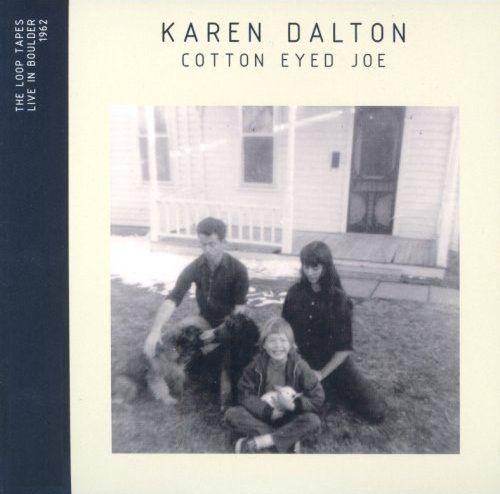
Karen Dalton ~ Cotton Eyed Joe: The Loop Tapes - Live in Boulder - 1962 [Megaphone, 2007] 320/FLAC


CDMEGA15

Disk 1

01. It's Alright [Ray Charles] (5:45)
02. Everytime I Think Of Freedom [Adapt. Trad. Spiritual] (3:03)
03. Cotton Eyed Joe [Trad.] (4:31)
04. Pastures Of Plenty [Woody Guthrie] (3:52)
05. One May Morning [Trad.] (4:16)
06. Red Are The Flowers [Fred Neil] (5:31)
07. Blues On The Ceiling [Fred Neil] (3:19)
08. Run Tell That Major [Trad.] (3:22)
09. Down And Out [Cox-Feldman] (3:42)
10. Fannin's Street [Huddie Ledbetter] (2:33)

Disk 2

01. In The Evening [Leroy Carr] (5:10)
02. Old Hannah [Trad.] (3:27)
03. Pallett On Your Floor [Jelly Roll Morton] (3:38)
04. Prettiest Train [Trad. - Lomax Prixon Recordings] (4:10)
05. Mole In The Ground [Trad.] (5:47)
06. Darlin's Corey [Trad.] (4:42)
07. It Hurts Me Too [Mel London] (4:12)
08. Katie Cruel [Trad.] (2:33)
09. Blackjack [Ray Charles] (3:12)
10. No More Taters [Trad.] (4:57)
11. Good Morning Blues [Ledbetter] (3:36)


'Tall, beautiful, and haunted by hard drugs and alcohol, a situation that left her homeless and nearly toothless at her death in New York in 1993, Karen Dalton never found commercial success in her lifetime, but her extremely small recording legacy [just two albums, 1969's It's So Hard to Tell Who's Going to Love You the Best and 1971's In My Own Time, and now this double-disc live set from 1962] reveals a maverick and singular musician utterly unlike anyone else on the folk [or any other] scene. Possessing an eerie, riveting voice and vocal style that could almost be called harrowing if it didn't carry so much of the real world in its emotional depths, Dalton's folk-blues repertoire consisted of odd bits of traditional fare [which she generally took in directions only she could have imagined], an assortment of Fred Neil songs [the artist she most resembles emotionally], Billie Holiday's "God Bless the Child" [Dalton's vocal phrasing has recalled Holiday's for many listeners], and assorted R&B songs, often those made famous by Ray Charles, which she stripped down and took into startling new places. Accompanying herself on a Gibson 12-string acoustic guitar or her trademark long-neck banjo, Dalton performed live sets that were tense, draining affairs, leaving little doubt that this was a woman who sang from a place few others had ever even glimpsed. This remarkable live set was taped in October of 1962 at the Attic coffeehouse in Boulder, CO, by Joe Loop, and it unveils as a stilled and stark reading of Dalton's musical story, offering her eerie and moody version of Ray Charles' "It's Alright," an absolutely haunting take on the old fiddle tune "Cotton Eyed Joe," a real-as-it-gets rendition of Fred Neil's "Blues on the Ceiling," and a stunning run-through of the traditional [and for all practical purposes, Dalton's signature tune] "Katie Cruel," all of it done with the unhurried pace of an intense all-night conversation. Dalton has said that one doesn't sing songs, one speaks them, and that philosophy helps explain her idiosyncratic vocal style, which shifts lines into unexpected patterns, mimicking, in a way, the pace and flow of solo speech, although make no mistake, what Dalton does is singing, and singing done with a hushed urgency, and in a way, it is more like a free-flight jazz horn break on an old blues standard than anything else. Dalton's approach isn't for everyone, and this is far from an album to throw on at a party -- the barely veiled emotional power of these vocal performances is much more likely to produce a stunned silence than any kind of levity. She was one of a kind, and the real tragedy is that people are only discovering that now some dozen years and more after her death.' Steve Leggett


doug schulkind played one of these tunes on his increasingly sublime give the drummer some web radio stream on fmu this afterlunch & i was reminded of how pearlesque the majority of these performances really are. as doomed as doomed can be, yknow? during the extended winter of 2007-08 somewhere in portland, oregon, an entire haushold of broken-hearted junkies became utterly transfixed & haunted by these harrowing recordings. now some 3 years later, under a different roof & waning moon, more flavourful youngsters who don't shoot drugs are still getting turned on :) sweet progress!

Wednesday, April 20, 2011

VA ~ Murder: Songs from the Dark Side of the Soul [Trikont, 2009]


0399

01. Jimmie Rodgers - Gamblin' Bar Room Blues 2 (1932)
02. Ethel Waters - Frankie and Johnny (1938)
03. Sonny Boy Williamson - Your Funeral My Trial (1958)
04. Lord Executor - Seven Skeletons Found in the Yard (1938)
05. Billy Boy Arnold - Prisoner's Plea (1957)
06. Wilmoth Houdini and His Humming Birds - Bandsman Shooting Case (1934)
07. Roosevelt Sykes "The Honey Dripper" - 44 Blues (1939)
08. Memphis Minnie - Biting Bug Blues (1935)
09. Bessie Smith & Her Blue Boys - Send Me to the 'lectric Chair (1937)
10. Wade Mainer & Zeke Morris - Down in the Willow Garden(1937)
11. Blind Boy Fuller - Pistol Slapper Blues (1938)
12. A'nt Idy Harper & the Coon Creek Girls - Poor Naomi Wise (1938)
13. Honeyboy - Bloodstains on the Wall (1953)
14. Little Walter and His Jukes - Boom Boom, Out Goes the Light (1955)
15. Louis Armstrong with Louis Jordan and His Tympany Five - You Rascal, You (1950)
16. Champion Jack Dupree - I'm Going Down with You (1945)
17. The Stanley Brothers - Pretty Polly (1950)
18. Archibald - Stack-A-Lee Parts 1 & 2 (1950)
19. Henry Thomas "Ragtime Texas" - Bob McKinney (1927)
20. G B Grayson & Henry Whitter - Rose Conley (1927)
21. Billie Holiday - Strange Fruit (1938)
22. Lonnie Johnson - Got the Blues for Murder Only (1930)
23. The Delmore Brothers - The Fugitive's Lament (1935)


'Ever since the days of Cain and Abel, many a fine murder story has gripped people's imagination. Jealousy is not the only root cause of man's murderous impulse. Greed, lust, guilt, power - any one of these, it seems, is sufficient to justify taking a human life. Every day we read of brutal murders being committed. These stories were ripped from newspaper headlines and recast into verse and recorded, often within weeks of the actual event. They became part of the repertoire of hillbilly bands, blues guitarists, jugbands, r&b and tin pan alley entertainers, bluegrass artists and calypso singers.'

one of the most successful thematic compilations of haunted olde tunes from the trikont imprint, featuring a few familiar staples & several more stunners that don't seem to get repeatedly regurgitated on every new old-timey comp from some of the younger upstarts. 320 er FLACK + bi-lingual skannage

Thursday, December 9, 2010

Sol Hoopii ~ Master of the Hawaiian Guitar Vol 1 1926-30 [Rounder, 1977/91]


Rounder 1024

01. Twelfth Street Rag 3:28
02. I Ain't Got Nobody 3:09
03. Hula Blues 3:12
04. Chimes 3:00
05. Sweet Lei Lehua 2:57
06. Most Of All I Want Your Love
07. Feelin' No Pain 3:23
08. Kilohana 3:21
09. Stack O'Lee Blues 3:01
10. St. Louis Blues 3:06
11. Patches 3:12
12. Alekoki 2:38
13. Farewell Blues 2:52
14. Singing The Blues 2:56
15. Hilo 3:04
16. Tin Roof Blues 3:16

dear frenz, aint got no thyme fer sound samps & that mess bein on de road like eye is, but rest assured if you dug any of the other hawaiian ish we dropped previously, do not hesitate. hoopii was gawdhed & deez peerless recordings are over 80 years olde. this one requested at the resplendent record fiend grog, 320 luaus later

Friday, October 15, 2010

VA - Folks, He Sure Do Pull Some Bow! Vintage Fiddle Music 1927-1935 [Old Hat, 2001]


01. Rukus Juice And Chittlin' - Memphis Jug Band
02. The Jazz Fiddler - Walter Jacobs And Lonnie Carter
03. Moanin' And Groanin' Blues - "Peg Leg" Howell And His Gang
04. Dance Hall Shuffle - Clifford Hayes' Louisville Stompers
05. My Four Reasons - Banjo Ikey Robinson And His Bull Fiddle Band
06. Wild Cow Blues - Joe Williams' Washboard Blues Singers
07. Knox County Stomp - Tennessee Chocolate Drops
08. Rustlin' Man - State Street Boys
09. Sister Maud Mule - Alec Johnson
10. G Rag - Georgia Yellow Hammers
11. Throw Me In The Alley - Peetie Wheatstraw And His Blue Blowers
12. If You Can't Make It Easy, Sweet Mama - Dixieland Jug Blowers
13. Bunker Hill Blues - Frank Stokes
14. I Got A Gal - James Cole's String Band
15. Sweet To Mama - State Street Boys
16. Doctor Medicine - South Memphis Jug Band
17. Cabo Verdranos Peca Nove - Abrew's Portuguese Instrumental Trio
18. Worried Man Blues - Joe Williams' Washboard Blues Singers
19. Georgia Crawl - Henry Williams And Eddie Anthony
20. Good Old Turnip Greens - Bo Chatman
21. Memphis Stomp - The Blue Boys
22. Get Up Off That Jazzophone - The Bubbling-Over Five
23. Rukus Juice Shuffle - Alabama Rascals
24. Lazy Lazy River - Mississippi Sheiks


'24 tracks of rare fiddle music from the early years of recorded sound, covering a wide range of artists and styles. Playing ragtime tunes, country breakdowns, hardcore blues and hot jazz, these fiddlers cut loose on the instrument known as 'The Devil's Box.' Blues fans recognize Lonnie Johnson, Bo Carter, and Big Bill Broonzy as masters of the guitar, but these men were also talented fiddlers, and they’re all included on this disc. You’ll hear jazz from Chicago’s South Side, string band music from Mississippi, and blues from Beale Street. The State Street Boys play uptown blues, while groups like the Alabama Rascals and the Dixieland Jug Blowers provide good-time dance music.'

we loves old hat. the amazing musical selections & illustrious accompanying booklet [not included here] make this collection a mandatory perchase. 320 quintessential scrapes

Tuesday, September 28, 2010

L ~ Holy Letter [Holy Castle, 1992] Japan


01. Cold Was the Ground
02. Blues Trip #1
03. Blues Trip #2
04. Blues Trip #3
05. Utusimi
06. Holy Letter
07. Ben Ares Blue
08. Blues Trip #4
09. Troll
10. Blues Trip #5
11. Kiev

7"
A1. Azrini
B1. Harvest


All tracks composed and arranged by L except [1], composed by Blind Willie Johnson
L [Hiroyuki Usui] ~ 6-string, 12-string, bottleneck, bass, vibes, drums, assorted percussion, tam-tam, organ, harmonium, didjeridu
Taku Sugimoto: electric guitar [9]
Masaaki Motoyama: cello [6]
Engineered and produced by L

'L is the moniker of Hiroyuki Usui, one-time drummer for Fushitsusha and member of Marble Sheep. Recorded in 1989-90 and subsequently self-released with abysmal distribution, the venire is often serene, but the roiling white-heat psychedelia of Fushitsusha is present but sublimated; electric instruments, when present, vie with harmonium, didjeridu, cello and various assorted percussion, all creating a sonic blend in which every individual sound can be heard with stunning clarity. Even field recordings of muffled voices, waves and thunder – sounds that can easily be buried – are heard as stark backdrops against the silence. When the brew does reach boiling point, as in several of the five pieces called 'Blues Trip,' the tam-tam and kettle drum eruptions are momentary, transient microcosms of emotion which then submerge again into the uneasy calm.' ~ dusted

'Holy Letter is a barely-circulated masterpiece of deeply felt self-expression. Recorded in 1989/1990 by Hiroyuki Usui, Holy Letter beautifully captures the spirit and substance of a half-dozen of the key sub-underground pillars of sound. Working with guitar, vocals, vibes, harmonium, bass, drums, cello, field recordings, digeridoo, and more, Usui-san blends delicate folk, psychedelia, and experimental sounds into a mostly subdued but undeniably glowing suite. The layered but careful instrumentation on tracks like the epic 'Holy Letter' and 'Troll' backs the alternately plain-spoken and crooning vocals perfectly. Odd touches like snatches of throat singing and bowed vibraphone leap out of the mix at just the right time. There are overt references to the blues [the first track is an oblique cover of 'Cold Was The Ground'] - but other than the occassional slide guitar touch, the connection is overwhelmingly in the timeless feeling and atmosphere. I can hardly think of anything else like 'Holy Letter' but suffice to say if you like Richard Youngs, Popol Vuh, Six Organs of Admittance, Tim Buckley, acid-folk, japanese underground - anything like that - this is an essential purchase. Really, I'm not doing it justice.' ~ press hype

4 track superhero 'L' dropped this hazy vision of way out loner folk when i was still listening to honeywell erryday. at some point in the late neindeez, a wisened sage thoughtfully floated me a cassette with this album on one side & the black vial on the flip. still one of the best tapes anyone has ever made a bra. amazing how fresh it still sounds. here goes me 320 rip of the album & a scrounged rip of the accompanying [comparatively mediocre] 7" . oh, vhf re-issued this nugget awhile ago & that version can still be found on the cheap & even has an extra track. moody lo-fi fun

Monday, September 13, 2010

Magic Sam ~ Black Magic [Delmark, 1968]


A1 I Just Want A Little Bit [The Animals] 3:03
A2 What Have I Done Wrong 3:10
A3 Easy, Baby 3:54
A4 You Belong To Me 4:05
A5 It's All Your Fault [B.B. King] 4:50

B1 I Have The Same Old Blues 3:32
B2 You Don't Love Me, Baby 3:29
B3 San Jose 3:53
B4 Stop! You're Hurting Me 4:47
B5 Keep Loving Me Baby


Magic Sam - guitar, vocals
Mighty Joe Young - guitar
Eddie Shaw - tenor sax
Lafayette Leake - piano
Mack Thompson - bass
Odie Payne - drums

'This album's color cover photo is an action shot, showing Magic Sam in the process of choking and bending his strings, a good hike up the fretboard. It isn't clear exactly what he is playing from the picture, although that certainly didn't stop dozens of pimply hippie guitar players from trying to figure it out. In the meantime, the record goes on and the first soloist out of the gate is Eddie Shaw, playing tenor sax. He is blowing over the top of an R&B riff that, although not out of the syntax of Chicago blues, would also have been quite fitting on a Wilson Pickett record. It is unfortunate that Magic Sam's recording career came to such an abrupt end, as he was one of the best artists working in the musical area between the urban blues tradition and newly developing soul music forms. This fusion was on the minds of many blues artists during the late '60s, and not just because it was aesthetically conceivable. It was also a matter of commerce, as audiences -- particularly black audiences -- didn't want to hear any blues that sounded too much like something their parents might have listened to. The harmonica player Junior Wells was another one who decided to get a bit of James Brown into his act, not always with great results. What listeners have here, on the other hand, is frankly delicious, the results of the surplus of talent Magic Sam possessed, a triple threat as a guitarist, singer, and songwriter. Yet with all this talent, the label should also get some credit. This period of the Delmark discography set a high standard for blues recordings, the sound quality and tight interplay among the musicians every bit the equal of the classic jazz recordings on labels such as Blue Note and Prestige. There is nothing fancy about the production, and no gimmicks. It is just a great band, allowed to play the music exactly the way it wanted to. The musicians have obviously worked together a great deal and either had these arrangements down cold from live gigs or had plenty of time to get things tight. This doesn't mean that the music doesn't breathe, as there are plenty of little touches such as drum fills and turnarounds that show the presence of musicians thinking on their feet.

The passage of time also increases the musical value of this music, as the eventual popularity of commercial projects such as the Blues Brothers has only served to dilute the power of urban blues. Labels big and small have forsaken this type of honest and straightforward production, preferring to try concocting a higher level of funkiness through extravagent over-production, boring superstar guest appearances, and insipid studio practices such as prerecorded rhythm tracks and dipstick guitar solos punched in a note at the time. Forget all this jive and check out a track such as 'You Belong to Me,' where the guitarist cuts loose with a restrained solo that sometimes dances ahead of the beat like a country fiddler while the band pumps away on a superb riff. The players here, including the fine guitarist Mighty Joe Young, pianist Lafayette Leake, and a muscular rhythm section, are the best of the best. None are too obviously adopted from standards, but the opening 'I Just Want a Little Bit' was much copied by other blues artists. 'I Have the Same Old Blues' has a medium, loping blues tempo that swings so perfectly it should be used as an instruction course for lame blues bar bands.' ~ Eugene Chadbourne, AMG

rare early french pressing of this, sam's 2nd lp for delmark. while some say it aint as tight as west side soul, i still dig this set immensely, specially the piano & tremulous timbre of sam's fine voice, steeped in slapback echo. a 320 vinyl rip. thanks to tha og rypupa

Friday, September 3, 2010

Blind Willie McTell ~ The Complete 1940 Library of Congress Recordings [Document]


01 - Just as well get ready, you got to die; Climbing high mountains, tryin` to get home
02 - Monologue on accidents
03 - Boll weevil
04 - Delia
05 - Dying crapshooter`s blues
06 - Will Fox
07 - I got to cross the River Jordan
08 - Monologue on old songs; Old time religion, Amen
09 - Amazing grace
10 - Monologue on history of the blues, life as maker of records; himself
11 - King Edward blues
12 - Murderer`s home blues
13 - Kill-it-Kid rag
14 - Chainey
15 - I got to cross de River o`Jordan [excerpt]


'Blind Willie McTell's 'Tryin’ To Get Home' presents what must be one of the most historic recordings in African-American history. The result of this encounter in Atlanta, Georgia, was a recorded interview which captured a close insight into the life and music of one of the greatest Country Blues names to have been commercially recorded. Presented here in their entirety is a fascinating insight into the man who inspired among others Allman Brothers, Taj Mahal and Bob Dylan. Blind Willie discusses his life, recording career and the history behind his music. Twelve excellent performances including blues, spirituals, ballads and rags can be heard. His skills as a 12-string guitarist, including some beautiful bottleneck / slide guitar, underline his reputation as being one of the finest musicians from Georgia. The history of these Library of Congress, Archive of American Folk Song, recordings is rooted in a visit made by John and Ruby Lomax to Atlanta, Georgia during November 1940. It is reported that Ruby spotted a 'Negro man with a guitar' entertaining at a pig n whistle stand. Stopping their car to enquire, they discovered that the individual was Blind Willie McTell who had recorded for Victor, Columbia and Decca. The Lomaxes gave him a lift back to their hotel and the totally blind McTell astounded them by giving accurate directions from the map etched on his memory. Despite having been involved in a minor motoring accident the previous night, he agreed to return the following day to sing and reminisce for them. The next morning in their hotel room he "sang and played his 12-string guitar vigorously for two hours", forty or so minutes of which were committed to tape.' ~ press

by request. hopefully mctell needs no introduction. most of these tunes are totally superb & unlike the rest of his recorded catalogue in that he got to stretch out a bit & sing some olde thyme hymns. a very illuminating & utterly essential session recorded by John Lomax for the benefit of the Library of Congress in Washington, & you too. a 320 rip