Showing posts with label songbirds. Show all posts

Thursday, April 28, 2011

Googoosh گوگوش Doe Mahi • Best of Googoosh 3 [Caltex, 1997]


2045 CD

01. Gol Bi Goldoun
02. Sahel Va Darya
03. Bizar
04. Sekeh Khorshid
05. Doe Mahi
06. Yadet Basheh
07. Anrouz
08. Sabz-O-Sefeed
09. Gol Gham
10. Daryaye Entezar
11. Koucheh
12. Felfel
13. Jomeh
14. Shad E Shad

'Googoosh was born 'Faegeh Atashin' on 5 May 1950, in Sarcheshmeh Street of Tehran. Her father, Saber Atashin was an Iranian Azerbaijani who emigrated back to his native Iran several years before his marriage. While Googoosh was still an infant, her father divorced her mother & she began doing impersonations of some of the singers of the time. When her father discovered this talent, he put her on stage. She was raised bilingual, being fluent in the Persian and Azerbaijani languages. She was the cultural ambassador to troubled regions like Iraq and Afghanistan. Being bilingual from the beginning of her life gave her an upper hand in understanding others. She became interested in the languages of the Mediterranean and learned many of them. Thus, she has fluently sung hits in Arabic, English, French, and Italian during her career as well, winning awards for many of these songs.

She is known for her contributions to Iranian pop music, but also starred in a variety of movies from the 1950s to the 1970s. She achieved the pinnacle of her fame and success towards the end of the 1970s. Her overall impact and contributions to Middle Eastern and Central Asian pop-music earned her the title of the most iconic female pop-singer from those regions. Due to her great talents and overall endearment to her people, she is eternally a symbol of national-pride to the Iranian people.

After the Iranian Revolution in 1979, she is famously known for remaining in Iran until 2000 and not performing again due to the ban on female singers. Still, her following grew. Younger people have rediscovered her music via bootleg recordings. Outside of Iran, she has a significant following in many Middle Eastern and Central Asian countries, and has even caught the attention of western media and press. Googoosh is rumored to reside in an estimated $16 million valued estate near Bel Air, Los Angeles, California, and continues her career, albeit in a limited manner.' wiki


'Googoosh is a female singer with an enchanting voice and a mix of local and international-magpie elements in her music. Her voice is lighter than Fairuz, but at times almost as ravishing.' ~ John Storm Roberts, Original Music

the most consistent collection i could trace from this gawdess, featuring five or six serious stunners. better odds than on most lp's when you think about it. some lovely schtuff too, especially when juxtaposed betwixt some funkier african jams [like that vintage ebo taylor joint on strut, por ejemplo]. and though there's typically some slapback echo or reverb effect on her velvety, enveloping voice, the melodies are mostly mid paced numbers with orchestrated strings & what sounds like combo organ accompaniment. so apart from her otherworldly superlungs, there aint much overtly funky or psychedelique here & apparently zero overlap with this impending sickness either. 320 er FLACK fer the bit racist amongst ya. further more

Tuesday, April 26, 2011

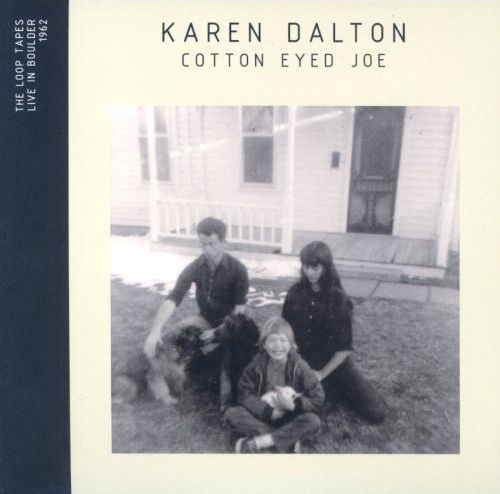
Karen Dalton ~ Cotton Eyed Joe: The Loop Tapes - Live in Boulder - 1962 [Megaphone, 2007] 320/FLAC


CDMEGA15

Disk 1

01. It's Alright [Ray Charles] (5:45)
02. Everytime I Think Of Freedom [Adapt. Trad. Spiritual] (3:03)
03. Cotton Eyed Joe [Trad.] (4:31)
04. Pastures Of Plenty [Woody Guthrie] (3:52)
05. One May Morning [Trad.] (4:16)
06. Red Are The Flowers [Fred Neil] (5:31)
07. Blues On The Ceiling [Fred Neil] (3:19)
08. Run Tell That Major [Trad.] (3:22)
09. Down And Out [Cox-Feldman] (3:42)
10. Fannin's Street [Huddie Ledbetter] (2:33)

Disk 2

01. In The Evening [Leroy Carr] (5:10)
02. Old Hannah [Trad.] (3:27)
03. Pallett On Your Floor [Jelly Roll Morton] (3:38)
04. Prettiest Train [Trad. - Lomax Prixon Recordings] (4:10)
05. Mole In The Ground [Trad.] (5:47)
06. Darlin's Corey [Trad.] (4:42)
07. It Hurts Me Too [Mel London] (4:12)
08. Katie Cruel [Trad.] (2:33)
09. Blackjack [Ray Charles] (3:12)
10. No More Taters [Trad.] (4:57)
11. Good Morning Blues [Ledbetter] (3:36)


'Tall, beautiful, and haunted by hard drugs and alcohol, a situation that left her homeless and nearly toothless at her death in New York in 1993, Karen Dalton never found commercial success in her lifetime, but her extremely small recording legacy [just two albums, 1969's It's So Hard to Tell Who's Going to Love You the Best and 1971's In My Own Time, and now this double-disc live set from 1962] reveals a maverick and singular musician utterly unlike anyone else on the folk [or any other] scene. Possessing an eerie, riveting voice and vocal style that could almost be called harrowing if it didn't carry so much of the real world in its emotional depths, Dalton's folk-blues repertoire consisted of odd bits of traditional fare [which she generally took in directions only she could have imagined], an assortment of Fred Neil songs [the artist she most resembles emotionally], Billie Holiday's "God Bless the Child" [Dalton's vocal phrasing has recalled Holiday's for many listeners], and assorted R&B songs, often those made famous by Ray Charles, which she stripped down and took into startling new places. Accompanying herself on a Gibson 12-string acoustic guitar or her trademark long-neck banjo, Dalton performed live sets that were tense, draining affairs, leaving little doubt that this was a woman who sang from a place few others had ever even glimpsed. This remarkable live set was taped in October of 1962 at the Attic coffeehouse in Boulder, CO, by Joe Loop, and it unveils as a stilled and stark reading of Dalton's musical story, offering her eerie and moody version of Ray Charles' "It's Alright," an absolutely haunting take on the old fiddle tune "Cotton Eyed Joe," a real-as-it-gets rendition of Fred Neil's "Blues on the Ceiling," and a stunning run-through of the traditional [and for all practical purposes, Dalton's signature tune] "Katie Cruel," all of it done with the unhurried pace of an intense all-night conversation. Dalton has said that one doesn't sing songs, one speaks them, and that philosophy helps explain her idiosyncratic vocal style, which shifts lines into unexpected patterns, mimicking, in a way, the pace and flow of solo speech, although make no mistake, what Dalton does is singing, and singing done with a hushed urgency, and in a way, it is more like a free-flight jazz horn break on an old blues standard than anything else. Dalton's approach isn't for everyone, and this is far from an album to throw on at a party -- the barely veiled emotional power of these vocal performances is much more likely to produce a stunned silence than any kind of levity. She was one of a kind, and the real tragedy is that people are only discovering that now some dozen years and more after her death.' Steve Leggett


doug schulkind played one of these tunes on his increasingly sublime give the drummer some web radio stream on fmu this afterlunch & i was reminded of how pearlesque the majority of these performances really are. as doomed as doomed can be, yknow? during the extended winter of 2007-08 somewhere in portland, oregon, an entire haushold of broken-hearted junkies became utterly transfixed & haunted by these harrowing recordings. now some 3 years later, under a different roof & waning moon, more flavourful youngsters who don't shoot drugs are still getting turned on :) sweet progress!

Saturday, April 23, 2011

Googoosh گوگوش طلاق Talagh


googoosh is like the sweetest sounding name ever. what could it mean? this track borrows the same groove as heaven on their minds from jesus christ superstain, along with soyle beni by grazia. perhaps the melody is even older tho? i've no clue, but i endeavor to get to the bottom of it :) here goes a hq mp3 of talagh sourced from the lovely pomegranates comp on finders keepers. fun schtuff

Monday, April 18, 2011

VA ~ Voices of North American Owls 2xCD [Cornell Lab of Ornithology, 2006]


'On this 2–CD audio guide you'll hear nearly 200 tracks featuring the hoots, screams, chitters, squawks, squeals, bill claps and barks of 19 regularly occurring species of North American owls and two rarities–the most comprehensive guide to owl vocalizations available.

Owls have a rich repertoire of sounds for communicating in the dark. A 56-page booklet with full-color images describes the wide variety of vocalizations made by each species. It will help birders identify these denizens of the night–from the ghostly Barn Owl, to the tiny Elf Owl, to the familiar Great Horned Owl. You'll gain a greater appreciation for owls and their sounds and behaviors.' press

'I rejoice that there are owls. Let them do the idiotic and maniacal hooting for men. It is a sound admirably suited to swamps and twilight woods which no day illustrates, suggesting a vast and undeveloped nature which men have not recognized. They represent the stark twilight and unsatisfied thoughts which all have.' ~ Henry David Thoreau, Walden

duh. 320 trills later + pdf of wildly informative booklet

Friday, April 1, 2011

Morena y Clara ~ Morena y Clara LP [1976]


mierda! so many winning tracks. gracias labmue! click on something fer transport or if ya need proof scroll down a taste fer the video

Monday, March 28, 2011

Christina Carter ~ Texas Blues Working 2xLP [Blackest Rainbow, 2011]


BRR056

A1 Pale Rose Cream
A2 A Blind Eye

B1 The Outer Planet
B2 Bird's Nest

C1 Preserve Our Face
C2 Dinner Plate Of Dust

D1 Lady Friend

re-release of the cassette issued in 2008 but with 1 long bonus track 'Lady Friend'. beautiful black & white photographs by Joe Blanchard

'Texas Blues Working features six tracks of stunningly haunting guitar and vocals, creating an immensely deep and emotional listening experience. The previously unreleased track, the sublime 21 minute 'Ladyfriend', is another example of Christina's incredible voice and guitar playing. Her voice is just unreal, so deeply emotional and mournful it gives you goosebumps.'

instantly sold out dubble long player version of the superb k7 from 2k8. spooky americana at its finest, just in time fer spring? some lovely late nite glistening

Sunday, March 20, 2011

VA ~ Winter Is Blue C90 mixtape [holy warbles, 2011]


TRILL 03

78 Side

01. Eddie South - Two Guitars 1929
02. Danai - Misirlou, 1947
03. Georges Boulanger et son Orchestre - Sombre Dimanche, 1934
04. Oscar Alemán - Bésame Mucho, 1943
05. Abe Ellstein Orchestra - Second Avenue square dance, 1950
06. Shorty Godwin - Jimbo Jambo Land, 1929
07. Harry Choates - Devil in the Bayou, 1946
08. Dick Reinhart - Always Marry Your Lover, 1929
09. Efisio Melis - Fiuda Bagadia, 1943
10. Wasyl Emetz - Ukranian Bandura, 1930
11. Amelita Galli-Curci - Sadko: Song of India, 1922
12. The Gilt Edged Four - Yiddisher Charleston, 1927
13. Damia - Sombre Dimanche, 1936
14. William Moore - Old Country Rock, 1928
15. Emmet Miller - Sam & Bill At The Graveyard, 1930

Wile Side

16. Mohd Rafi - Jinhe Naaz Hai Hind Par [Pyaasa], 1957
17. Samuel Malavsky - V'Shomru, 1929
18. Syl Johnson - Teardrops, 1959
19. Kookie Cook - Revenge, 1966
20. Grayson & Whitter - Rose Conley, 1927
21. Lata Mangeshkar - Kahin Deep Jale Kahin Dil [Bees Saal Baad], 1962
22. Malvina Reynolds - From Way Up Here, 1971
23. Freshly Wrapped Candies - Green Grass, 1987
24. Graham Davies - The Road Is Hard, 1976
25. Wiley Walker & Gene Sullivan - When My Blue Moon Turns to Gold Again, 1941
26. Stan Hubbs - Golden Rose, 1982
27. Spooky Dance Band - Nightmare Fantasy, y2k
28. Ben Douglas - Foxhunt, 1960


started making a mix of a buncha haunting 78's just to see if i could & once i had, i began to realize i been listening to pretty much the same tunes fer the last decade & disproportionately representing america & turkey. so i attempted to switch it up a bit & this is the result. too sad fer the public? kitty lovingly donated by murky

Monday, December 6, 2010

Claude Lombard S/T LP [1969, mpls ltd, 2010]


01. Polychrome
02. Les Enfants Perle
03. Midi
04. Mais
05. La Coupe
06. Sleep Well
07. L’usine
08. Les Vieux Comptoirs
09. Les Musiciens
10. L’arbre Et L’oiseau
11. La Camarde
12. Petit frere

'Mod & psychedelia inflected French pop from Claude Lombard – a Belgian singer who found her niche in France – her wildy groovy self titled album from 1969! The sound is fantastic, with the sounds of the late 60s that could be found on pop psyche and easy gems internationally at the time, but it's got a vibe it's all it's own! The girlish vocals, chiming acoustic guitars, and rumbling bass all remind us a bit some of Lee Hazlewood's productions in the mid to late 60s, but there's a lot more going on here, with touches of bossa nova, some really spacey sound washes, and uber insistent melodies. Wonderful!' ~ dusty

please perch the wax for a very nice price

still on de road, but was compelled to spread the holyday cheer around a bit. this glorious gift was thoughtfully slipped in our comments by a sweetheart who calls himself Michael, so kindly extend yer warmest seasonal blessings upon him for his most resonant rip of sultry, space age sounds from cosmic chanteuse Claude Lombard. this is exactly the kind of sharing we live for as we travel the crooked highways of this once proud land soaking up these trippy, romantic vibes. 320 remerciements à frère Michael!

Monday, July 19, 2010

Brigitte Fontaine ~ Est... Folle LP [Saravah, 1968]


A1 Il Pleut 2:32
A2 Le Beau Cancer 1:59
A3 Il Se Passe Des Choses 3:34
A4 Une Fois Mais Pas Deux 2:45
A5 L'Homme Objet 1:30
A6 Éternelle 2:23

B1 Blanche Neige 3:30
B2 Comme Rimbaud 1:53
B3 Dommage Que Tu Sois Mort 2:25
B4 Je Suis Inadaptée 2:41
B5 Cet Enfant Que Je T'Avais Fait 4:25

Arranged By - Jean-Claude Vannier

i am rather enamored of this lady in general, but this particular lp is a recent discovery. together we'll find out if it stands the test of time & warrants repeated listening, but it's a pretty sexy slice off the top if you axe me. arranged by the same brother who orchestrated histoire la melodie nelson. the recording is over 40 years old & still sounds fresh to these ears, tho i was warned to ignore the last song & i must urge you, dear reader, to do likewise. apart from that tiny disclaimer, the arrangements are pretty innovative, the lyrics humorously bizarre & dear brigitte is in fine voice. 320 remerciements à solipse

Thursday, June 24, 2010

Léona Gabriel ~ La Reine de la Biguine [Maladie d'amour] 78rpm recordings


Pharaon Records, 1996
01. Maladie d'amour
02. C'est biguine
03. Ti femme ta la
04. Mabillage décollage
05. Femme qui dou
06. Petite fleur fanée
07. Calalou
08. Moin belle !
09. Maman...la grève barré moin (oué, oué, oué)
10. Ti bourrique assou la l'vée
11. Ah ! gadé yo ché
12. Agalou
13. A si paré
14. L'échelle poule
15. Ninon
16. Zafé co ida
17. Mamée la créole
18. Paris Biguine
19. Celestin roi diable
20. L'homme à lunettes


'Leona Gabriel was a Martinican biguine singer [1891-1971] born in Rivière-Pilote, Martinique. Daughter of a white creole she grew up in Martinique, going to secretarial school in Cayenne, Guyana at age 14, going on to work as a secretary for the Lesseps company during the building of the Panama Canal. After returning for a period to Martinique she moved to Paris in 1920. In France she began singing and recording with the orchestra of pianist Alexandre Stellio under the stage name of Mademoiselle Estrella. Gabriel returned to Martinique in the 1940s, becoming a radio presenter, a career which lasted over 30 years. She continued recording until the 1960s.' plus

hardly any takers on 10cc but that's all good, hopefully we scared off any uptite nonbelievers. here goes the reigning queen of biguine & one of the better songbirds, in any tongue. once again, haven't the foggiest notion what the 'graphic design division' of pharaon records musta been smokin when they green-lighted that garish cover art, but twas a labour of love coalescing those two old-school photos into a more optically inviting alternative for the uninitiated.

first heard this chanteuse & her wildly talented orchestre on the equally essential 'Hot Womens Singers from the Torrid Regions' compilation curated/ illustarted by R. Crumb. this one originally dropped by the unstoppable constantin59000 somewheres out thar in the more obscure realms [to yanks, anyway] of syberspace. thanks to toro y loco for the hot tip

Wednesday, June 2, 2010

VA - Le Stikhbar Chanté [En Algérie] ~ Les Préludes dans la Musique Arabo-Andalou


VA - Le Stikhbar Chanté (En Algerie)
Les Préludes dans la Musique Arabo-Andalou
Club du Disque Arabe [AAA 093] 1994

01 Nabiyatou elhosni 4:24 Dahmane Ben Achour
02 Bohormat elahdi 3:56 Dahmane Ben Achour
03 Qateltani bighaïri char'ine 4:12 Mohamed Khaznadji
04 Ouine ana ouine hbabi 3:04 Cheika Tetma
05 Qalbi oula men alem bih 1:24 Abdelkrim Dali
06 Masaâb haml elfraq 3:02 H.Mahfoud
07 Elhob yaatik qahra 1:14 Dahmane Ben Achour
08 Fraq elhayat 2:52 Fadhila Dziriya
09 Baâd elhajr elassir 2:37 H.M. Elanka
10 Ana laou achtkit lesma 3:10 Guerouabi
11 Assalat ala ennabi 1:46 B. Elankis
12 Osnor assa tnal 4:31 A. Chaou
13 Aqbal fasl arrabi 2:12 Hsissen
14 Elli habkoum 1:29 D. El Harachi
15 Haj sbabi maa elli 2:29 H. Saïd
16 Elqalb chahik 3:10 Salim Halali
17 Ya froukh ammis nelhor 2:40 A. Zerrouki
18 Athine youren 4:04 Cherife Kheddam
19 Ya fares 4:43 Driassa
20 Mada teddi ya trab 4:49 Abdelhamid Ababsa


ALGERIAN PRELUDES IN ARABO-ANDALUSIAN MUSIC
VOCAL ISTIKHBAR

All Algerian nawbahs begin with a piece called istikhbar [prelude]. Our CD AAA 007 gives an idea of the "instrumental istikhbar-s " as they are played on the various instruments traditionally used in classical Andalusian music. On this release you will get an opportunity to listen to 'vocal istikhbars', which are improvised vocal pieces.

In theory as well as in musical practice, Arab music is monodic but characterized by an untiring quest of all possible vocal abilities and all imaginable refinements in the area of modal diversity and basic intervals.

In performance everything is related to the refinement of the melodic line ornamented by fiorituras which may be compared to arabesques. The sophistication of the ornamentation tests the singer. Usually his interpretation of a poem is improvised in the mode of the next piece. Traditionally a vocal istikhbar is sung by the hed singer of the nawbah, enabling him to display all his vocal virtuosity from the start - we must not forget that personal achievements have always been considered of major importance in music.

Algerian istikhbars are known to be very rich musical pieces. Nowadays more and more istikhbar-s are compositions in spite of their seeming improvised. Here poetry and music blend into one and the refined sonorities of the various instruments respond to the human voice.

There are seven classical Algerian istikhbars, one for every basic mode, the others deriving from those seven ones. There are also istikhbar-s the origin of which is to be looked for in the East, not in Andalusian music. The interpretations by Mustapha Skandrani on his 'Stikhbar' LP from 1965 were recorded in the following order : "raml maya", "mawal", "sika", "iraq", "mezmûm", "ghrib" and "zidane" ; "dhil", "rasd-dhil" and "maya" derive from "mawal"; "hsine" and "ghrib" from Iraq and are usually found in folk music as far as it derives from classical music, which is the case with hawzi, arûbi and Chaâbi

The word "zidane" brings to mind the French words "Gitane" (Spanish Gipsy) and Tzigane (Hungarian Gipsy). Actually "zidane" is a mode characterized by sonorities reminding of genres that have but little to do with Arab music. From "zidane" two modes derive : "raml" and "mûjennaba". Three modes have but recently become part of classical Algerian music : "sahli" (from sahel i.e. beach, strand) - a genre close to "sika" -, the previously mentioned "hsine" and "kûrdi". From its name, it's easy to infer the third one originated in the Kurdish mountains. Hardly influenced by Algerian music, it has actually kept most of its Eastern charateristics. This list would not be exhaustive if we did not mention a very seldom used mode, of Eastern origin too, and not much influenced by Algerian music either : "djaharka"

Modern songs as well as folk songs use the same genres. Even songs considered as "folklore" and going back to the mists of time have nevertheless been somewhat influenced by classical music, for instance in their structure, their instrumental and non-metric vocal preludes, their refrains separating the verses etc.

On this collection we present you a number of istikhbars in the following order :

1- istikhbars as they are sung in classical nawbah-s either as preludes, or between two m'saddarat to achieve more diversity.

2- istikhbars in songs deriving from classical music ("hawzi", "arûbi", and "shaâbi".

3- istikhbars in modern songs that are quite similar in structure.

There are differences of course particularly in the type of accompaniment ; qanûn, kûweitra, lute and kamanja to accompany classical istikhbars; banjo, guitar and mandole to accompany folk songs. As to modern songs, they are often accompanied on the piano, organ or flute.

4- To illustrate an istikhbar of the folklore, we have chosen a Kabylian " ashwiq ". It reminds one of both a classical istikhbar and a Saharan "Aï !Aï ! " It could even be compared with the Spanish "Canto Flamenco" were it not for the rugged singing typical of the mountain dwellers' and that specific portamento which resounds from one mountain top to another as a heart-rending call for help - outstandingly modulated though! An "ashwiq" song does follow rules just as any istikhbar does but its rhythm is "free". Typical for such a song is that it always tells a tale of woe, laments over solitude, lorn lovers faithful to their love in spite of being forsaken... The words of these songs are unpretentious, they are not an experienced poet's verses, they are words sprung from the heart of a modest girl spinning wool or that of a shepherd, both being anonymous people but transitorily favoured by inspiration.

The example given here, "Athin yûren", is a vocal duet by Cherif Kheddam. It is a delicate, well-structured piece, rich in oriental sonorities and fiorituras . Here he sings it together with Nouara, all the while accompanying their duet on the lute. Of course, such a refined accompaniment brooks no comparison with the thin accompaniment provided by the flute, a regular instrument with the Kabyles.

5 - Our last istikhbar is a very odd one. It serves as an introduction to a song of the Saharan genre 'Aï ! Aï !', a genre the repertory of which consists of nothing else than istikhbars.

Some of the finest musique ever wax'd, but this collection of preludes leaves me starving to hear more, which is the only downside to this otherwise encroyable compilation of 'overtures' from renowned singers of the golden age of Algérie Arabo-Andalusian musique. In terms of broadening my scope regarding the very rich artistry, tradition & vocal virtuosity from this region, the depths of which was hitherto unknown to me, this compilation surely stands alone as the best i've personally ever had the good fortune to come across. If listening to this one leaves your ears as thirsty as it does mine, thankfully there is more just a few cliques away. Le Chargé d'affaires et Ministre de la Culture et des relations internationelles Luobanienne has recently posted another diamond, this thyme from Dahmane Ben Achour [featured on several traques hear] at the wildly inspirational & educational Anthems for the Nation of Luobaniya 罗巴尼亚国歌. spread the love around. sharon is karen! would also love to hear more from H. Mahfoud, A. Chaou & Abdelhamid Ababsa so kindly keep yr ears to the ground.

Tuesday, June 1, 2010

☆`*♥♫☆`*♥¸¸.•*¨*•♫ Cheikh Hsissen ☆`*♥♫☆`*♥•*¨*•♫☆ voice of the nightingale


Cheikh H'sissen [or Hsissen] is one of the great masters of musique Chaâbi from Algeria. born December 8, 1929 in the Casbah of Algiers, he began training at the mandolin and percussion when he was quite young. Soon he managed to master these instruments & at 15 years old, Cheikh Missoum, meticulous in his choice of musicians, was captivated by the artistic qualities of this prodigy. After several years spent with Cheikh Missoum, H'sissen learned a lot about the secrets of music Chaâbi. Hsissen would later use all the advice dished out by his master. Equipped with a splendid voice & enjoying a prodigious memory, allowing it to retain a long poem after reading it once or twice, he sang to much acclaim throughout the casbah & quickly ranked among the great tenors of the day. In a relatively short time, H'sissen became one of the cheikhs synonymous with chaâbi musique.

In 1959, H'sissen fell seriously ill. He died at the age of 30 years, following a battle with lung disease. He was buried in el djelaz in the city of Tunis [Tunisia]. Thus, the voice of the nightingale was extinguished forever. However despite the brevity of his career, H'sissen is considered by music lovers as one of the greatest masters of Chaâbi ever known in Algeria. hommage et biographie en français ici
happy june! forgive me for pushing my agenda so early in the month, but i need help finding any albums from the amazing chanson chaâbi Hsissen who died young & left an all too brief recorded legacy. the Club du Disque Arabe imprint released a retrospective collection entitled H'sissen ~ Andalouse Soirees Vol.1 [AAA-150] believed to be blurrily depicted above & there seem to be a few other less legit releases as well. can i get a witness? thank you.