Showing posts with label electronic. Show all posts

Tuesday, May 17, 2011

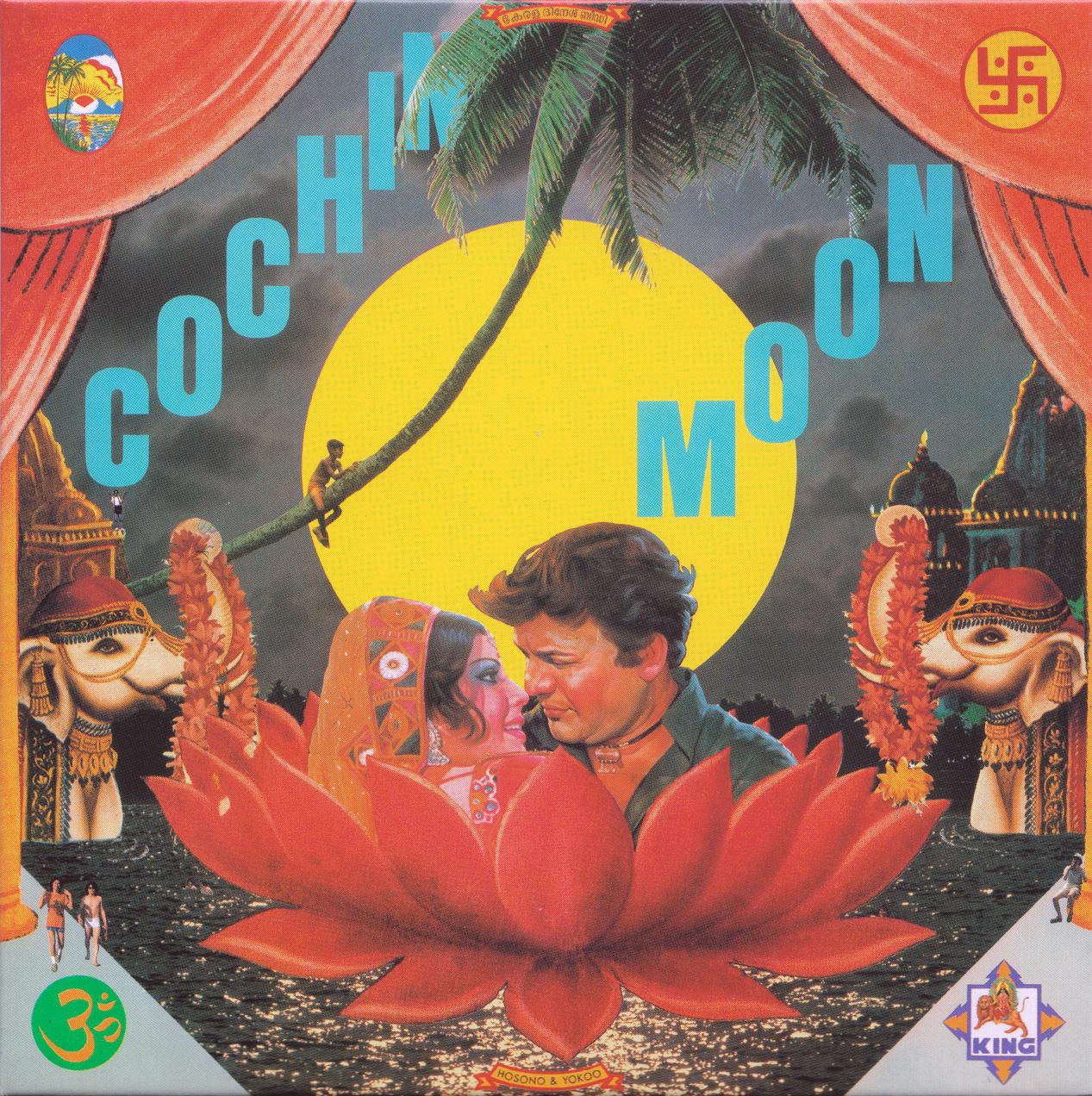
Haruomi Hosono • Tadanori Yokoo ~ Cochin Moon [1978, King, 2005] 320/FLAC


KICS-1139

1. Hotel Malabar Ground Floor …Triangle Circuit On The Sea-Forest… 2:28
2. Hotel Malabar Upper Floor …Moving Triangle… 8:45
3. Hotel Malabar Roof Garden …Revel Attack… 8:58
4. Hepatitis 4:43
5. Hum Ghar Sajan 8:50
6. Madam Consul General of Madras 9:04


Composer - Haruomi Hosono
Keyboards – Shuka Nishihara, Hiroshi Sato, Ryuichi Sakamoto
Programmed By [Computer] – Hideki Matsutake
Artwork - Tadanori Yokoo

'Before performing with Ryuichi Sakamoto in classic Japanese synth pop outfit Yellow Magic Orchestra [or just YMO], producer and onetime session bassist Haruomi Hosono made his share of eclectic music. If you're familiar with YMO, you might imagine he was involved in Kraftwerk-influenced electronic music, or perhaps more traditional pop, but as it happens, he made his name as session bassist and playing in bands like the psychedelic Apryl Fool and folk rockers Happy End-- a far cry from the modernist slant of his reputation in the West. However, he also made a record in 1978 called Cochin Moon with keyboardist Shuka Nishihara, and future YMO bandmates Sakamoto and Hideki Matsutake that is arguably more bizarre and forward thinking than anything he's done since.

Cochin Moon-- co-credited to Pop artist Tadanori Yokoo, who did the incredible Bollywood-style cover art-- is an electro-tropical soundtrack to a fake movie of the same name. That is, there was no film called Cochin Moon, but after visiting India, Hosono was inspired to make music suggesting the exotic, luxurious, and seemingly wonder-filled scenarios played out in Indian cinemas. However, the actual sound he and his cohorts came up with is often a world away from India: Imagine a totally electronic world of chattering bugs, fluttering birds, magic harps and drums that alternate between a thud and a blip. Hosono shares compositional duties with Nishihara, and Sakamoto's playing style is readily on display, as are Matsutake's considerable programming skills. As a historical document to YMO fans, Cochin Moon is interesting; as a slice of out-music stuck somewhere between Tangerine Dream, Wendy Carlos and Disney's Fantasia"

a quick search in the engine reveals that this classic is pretty ubiquitous on the blogosphere, but most everyone seems to be sharing the same source folder. i knew when i embarked upon this blobbing endeavour that eventually eyed share a superior rip of this landmark album of candy coated gloops n' gleeps & that day has finally dawned, so please enjoy the upgrade

Sunday, March 27, 2011

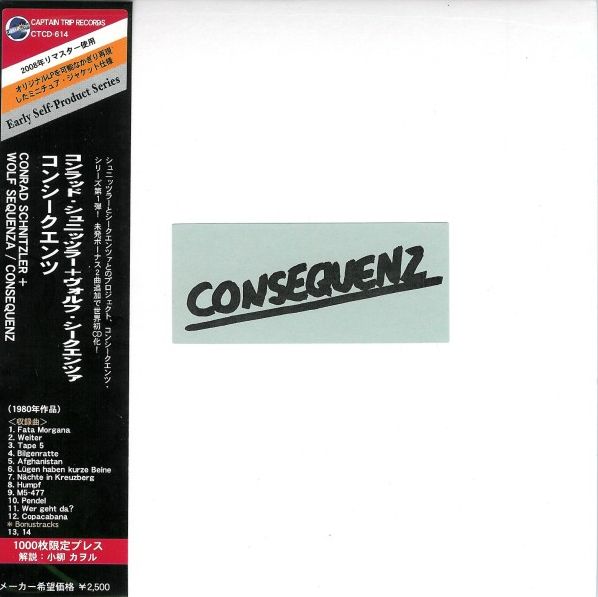
Conrad Schnitzler & Wolf Sequenza ~ Consequenz [1980, Captain Trip, 2008]


CTCD-614

01 Fata Morgana 5:13
02 Weiter 4:20
03 Tape 5 3:37
04 Bilgenratte 2:33
05 Afghanistan 5:31
06 Lügen Haben Kurze Beine 3:33
07 Nächte In Kreuzberg 3:48
08 Humpf 2:51
09 M5-477 4:39
10 Pendel 4:16
11 Wer Geht Da? 3:46
12 Copacabana 5:17

Bonus
13 Untitled 10:03
14 Untitled 8:25

Composed By - Conrad Schnitzler, Wolfgang Sequenza
Remastered By [Digital] - Souichirou Nakamura

Reissue of the 1980 private release with two bonus tracks in the 'Remastered & LP Cover Reissue Series' and the 'Early Self-Product Series'.

Recorded in 1980 except tracks 13 & 14 in 1982
Digital remastered at Peace Music Tokyo, Japan


by request & one of con's best. fun & catchy exploratory tron, 256 gleeps later. further

Sunday, December 12, 2010

Chasing Voices ~ Acidbathory 12" [Preserved Instincts, 2010]


A. Acidbathory


'Compelling artefact from an unknown operator experimenting with darkside structures and squashed percussive arrangements - sort of what you'd imagine obliterated dubstep produced by Mika Vainio would sound like. Strictly limited copies - all housed in a beautiful silver silk-screen sleeve - do not miss!* Clandestine avant-bass shocker from NYC courtesy of Chasing Voices. The 'Acidbathory' 12" is a long 1-track, single sided affair expressing a gnarled, scuzzy and uncompromising perspective on the darkside potential of low-end music. It's far removed from its cousins on the other side of the Atlantic, sharing their 139bpm DNA, but reared in a very different environment. Imagine Croydon estates and South London sprawl replaced by looming residential blocks, imposing skyscrapers and alleyways where the sunlight never reaches, soundtracked by mutant slow techno and Kevin Drumm records rather than 2-step garage and D'n'B. This aesthetic is exquisitely realised, from the unmarked matt-black centre stickers to the monochrome screen printed sleeve and the droning sludge step within, making this feel more like a Hospital Productions release than anything else. The closest analogs we could draw would be Scud & I-Sound's Wasteland project, a more controlled Cloaks, or Mika Vainio's more recent expeditions, but this is some mutant substance that refuses to stay put in any box. Well recommended!' ~ koombat

just learned of this most worthy electronic weirdness courtesy of the fine solar flares tumblr as re-blawged by killed in cars. dunno much about 'dubstep' as the kids are callin it, but i knows wot i likes & could swear i recognize the cover art from my distant hardcore past, but can't quite trace it. was the image used by zoviet france too? anyworms, much like the rest of the cognoscenti, we are enjoying this one thoroughly as we wind thru the bi-ways of new mexico, lovin on the majestique skies & largely untainted landscapes. incidentally, if you happen to know any good record diggin spots in taos or albuquirky, kindly illuminate. i promise we won't pillage the place as we are basically hobos. 320 rips yo

Thursday, November 11, 2010

James Blake ~ The Bells Sketch 12" [Hessle Audio, 2010]


HES011

A1. The Bells Sketch 4:17
B1. Buzzard And Kestrel 5:44
B2. Give A Man A Rod 4:34

Mastered at Metropolis. Side A plays at 45 RPM.Side B plays at 33 ⅓ RPM

more goodness from this prolific yungstar. unexpectedly delicious blend of skittering beats & alien tongue transmissions. try sequencing these in a mix with some of the wooly world music from this site. makes for a really effective contrast. 320 rips!

Saturday, October 30, 2010

John Foxx ~ Metamatic [Virgin, 1980] 320 kbps RE-RIP


A1. Plaza
A2. He's A Liquid
A3. Underpass
A4. Metal Beat
A5. No-One Driving

B1. A New Kind Of Man
B2. Blurred Girl
B3. 030
B4. Tidal Wave
B5. Touch And Go

Engineer - Gareth Jones
Additional Bass - Jake Durant
Additional Synthesizers - John Barker
Written-By, Producer, Synthesizer, Drum Programming, Artwork By - John Foxx

Metamatic was released in January 1980 - the first synth album of the new decade


first solo outing for John Foxx after departing Ultravox! & simply one of the finest achievements in pop music, electronic or otherwise. this is the synth album that spawned a million imitators & still casts a long shadow over the scene that none can seem to eclipse. by 1980, Foxx had obviously learned a few tricks after having albums produced by both Brian Eno & Conny Plank with his former band. the stripped down yet wildly vibrant sound, surreally dystopian lyrics, cold atmosphere & minimal packaging. he seemed to know exactly what he wanted to do & how to achieve the results. & this is it, as Alan Watts might say. grab it from us or try yer luck elsewhere, but definitely dig! this is not a request. insightful interview here. 320 blips!

Friday, October 22, 2010

Delayscape - Morse Disco 2cd [Anna Logue, 2010]


CD 1 - Music For Dancing At Home [65:53]
CD 2 - Music For Frozen Journeys [75:14]


Written-By - Flemming Kaspersen
Limited edition of 1000 copies.

'Delayscape is Flemming Kaspersen from Copenhagen, Denmark, creating the most beautiful melodic and melancholic electro you are most likely ever to hear. Usually, Anna did not find much fascination in electro acts as they are mostly missing the depth, the textures, the atmosphere, the ideas, and especially melodies, and, of course, that melancholy that Anna is seeking for in music. Delayscape is different, and unique, here suddenly it was all there and in a massiveness that lead to several emotional outbursts in Anna’s office. Flemming has rare abilities: he is such a master of sound synthesis, sequencing and he has a great imagination. His tracks are so full of the most brilliant synthesiser sounds, the most wonderful pads/strings, Roland TR-808 simulated rhythms and synthetic percussions, and all is so very organic and honest and interesting.' - press hype

support the artist

recently been spinning this collection when i write or do my homework. essentially a partial discography of Delayscape culminated from various releases over the past decade. each disc has 16 tracks of super listenable contemporary electronic music

Saturday, October 9, 2010

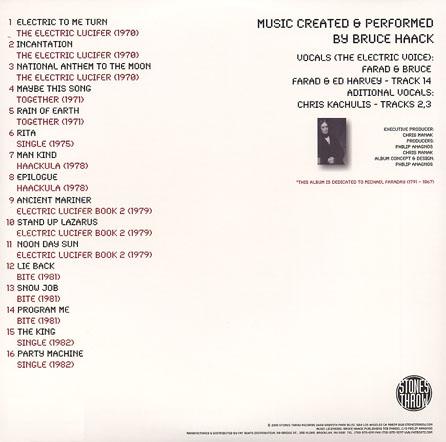
Bruce Haack ~ Farad: The Electric Voice [Stones Throw, 2010]


released & unreleased vocoder recordings, 1970-1982

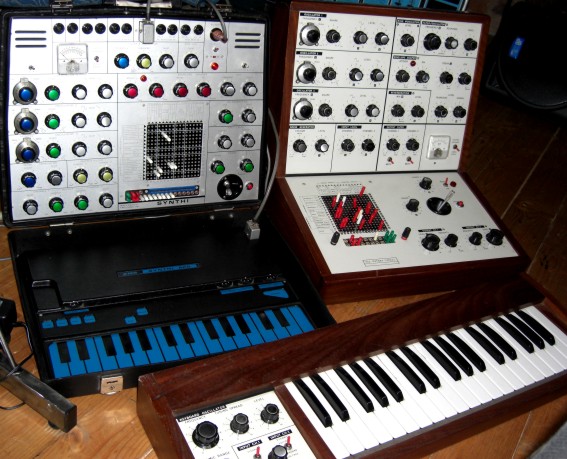
'Bruce Haack's music is rooted in the idea that humans and electronic machines share a reciprocal relationship that manifests itself through sounds. In order to further explore this dynamic, Haack dropped out of Juilliard to pursue a more experimental course in, surprisingly, educational children's music. Haack released material off his own label Dimension 5 Records in 1962, which allowed him to mix kinetic energy, infuse psychedelic philosophy, and pluck sounds from various genres across the board. Adding to his musical pastiches, Haack used home-made modular synthesizers, proto-vocoders, and the heat-touch sensitive Dermatron to expand his music into the technological realm of creativity.

After contributing to commercials, TV shows such as Mister Rogers, and theatre productions, Haack released the acid-rock-techno gem Electric Lucifer, a conceptual masterpiece that maps out a war between heaven and hell, and where notions of "powerlove" are mediated through Moog synths.

Farad serves as a glowing primer of Haack's work throughout his career. Touching on the lush, pysch-electronic grooves of the Electric Lucifer period and extending to his more abstract, angular works, this compilation highlights his use of the Farad, one of the first musical vocoders invented at the time. Yet amidst echoey reverb and haunting drones, Haack himself manages to create something primal and human, not necessarily conflating human and electronic but posing them as compatible partners.' ~ press hype

'Amazing electric grooves from synth innovator Bruce Haack – whose pioneering use of analog synths and vocoder vocals in the service of great, if far out songcraft was pretty much unrivaled in the 70s and into the early 80s – the period in which this excellent compilation on Stones Throw highlights! Haack's earlier successes were children's music in the 60s, and one of the coolest aspects of his 70s recordings was how that somewhat bright-eyed and innocent sing-song-y approach moved into more surrealist, weirder realms on albums like Electric Lucifer, that album's lesser known, still quite brilliant sequel, and albums like Haackula and Bite. Choice cuts from those albums as well as rare singles are rounded up for Stones Throw's impeccably curated overview. The electric voice and synth errata brings an otherworldly vibe to catchy songs – and Haack's use of the vocoder was followed by so many others who would become household names, from Kraftwerk to Pink Floyd to Moroder.' ~ dusty

snap up the re-ish

pretty slammin correction of uncle brucie's vocoder steez, even a couple we'd never heard before. for the uninitiated, it's highly recommended you trace both 'electric lucifer' lp's as well. they're owl up in the interwebs, just perform a quick search with yr favourite engine

Wednesday, September 8, 2010

Karlheinz Stockhausen ~ Opus 1970 - Stockhoven/Beethausen [Deutsche Grammophon,1969]


side 1 ~ 28:24
side 2 ~ 25:07

Created during a production between the 10th and 14th December 1969 in the Godorf/Cologne Studio

'Based formally on the composition of 'Kurzwellen': material is obtained from a regulating system [radio short waves], selected freely by the player and immediately developed. By 'developed' is meant: spread, condensed, extended, shortened, differently coloured, more or less articulated, transposed, modulated, multiplied, synchronized.

from the attached sleeve text [translated from German, i imagine]:
'This classic live electronic improvisation work [which grew out of Stockhausen's Kurzwellen] is actually a great noisy atonal tribute to Beethoven's Opus 212b. Stockhausen's Opus 1970 was composed to mark the 200th anniversary of Beethoven's birth, but curiously suppressed in the official list of Stockhausen works.
Stockhausen serves as sound-director of Aloys Kontarsky [piano], Johannes G. Fritsch [electric viola], Harald Bojé [Elektronium early electronic keyboard instrument], and Rolf Gehlhaar [tam-tam]. The players activate tapes containing abstract fragments of Beethoven's music as they perform and improvise in response, with Stockhausen electronically processing and mixing the group's output.'

most impressive group sounds from 69. originally dropped by the noble ooliver[thanks!] of avaxhome fame in .ape format & converted to 320 mp3 utilizing this piece of freeware. highly recommended

Thursday, July 29, 2010

Franco Battiato ~ Pollution [Bla Bla, 1973]


A1. Il Silenzio Del Rumore
A2. 31 Dicembre 1999 Ore 9
A3. Areknames

B1. Beta
B2. Plancton
B3. Pollution
B4. Ti Sei Mai Chiesto Quale Funzione Hai?

Vocals, Synthesizer - Battiato
Bass, Synthesizer - Gianni Mocchetti
Drums, Timpani - Gianfranco D'Adda
Guitar, Synthesizer - Mario Ellepi
Synthesizer - Ruby Cacciapaglia


'This very interesting recording of experimental/avant-garde/prog released by Franco Battiato in 1973, is one of two proggish albums he made in the early 1970's [the other being Fetus, 1972]. Given the complexity of this music, it is inconceivable that Battiato could have ever been a pop star, yet he was before 1972. He pretty much threw the pop approach out the window for this recording however, which consists largely of experimental passages on synthesizers including the VCS 2 [this is a new one for me] and the VCS 3, in addition to a tiny bit of pipe organ on Il silenzio del rumore. With regard to synthesizers, every band member with the single exception of the drummer plays one form of the VCS or the other. Furthermore, even though the VCS3 was used more as a sound generator than a melodic instrument, the tones employed are smooth, lush & clean. The pieces on the album are arranged such that tracks 1-4 form a suite of sorts that starts with a recording of classical music [it sounds like a waltz] over which Battiato provides spoken word passages in Italian [spoken word passages also close the suite]. The four pieces alternate heavily rocking sections of drums/bass/guitar, with experimental passages played on synths. Plancton starts of with some spacey sounds on the VCS3 and then gradually, acoustic guitar is incorporated along with some gloomy vocal parts. The closing segment of Plancton is heavily influenced by Italian folk music albeit with the added twist of odd sounds generated on the VCS3 [notice a pattern here?]. The title track Pollution provides more of the same, and at 8'48" is the longest piece on the album. The closing track is a personal favorite and just consists of heavily echoed/delayed, very sad and gothic sounding classically influenced synth lines [it almost sounds like a choir but not quite], on top of which Battiato half sings/half weeps his way through the piece [which ultimately gives way to his completely breaking down in fits of sobbing]. Highly recommended to all fans of Italian prog and experimental rock.' ~ jeff park

one of my favourite albums from this genuis of Italo psychedelique analog prog. if you thought the ems vcs3 or 'putney' was only capable of Hawkwind & Pink Floyd style signal processing, gleeps & gloops, hear they shine in owl their harmonically capable glory. happy & honoured to bring the definitive 320 version of this monster to the greater interwebs. give a hute, don't pollute :)

Saturday, July 10, 2010

David Behrman ~ On the Other Ocean LP [Lovely Music, 1978]


A. On the Other Ocean 23:30
  • Bassoon - Arthur Stidfole
  • Engineer - "Blue" Gene Tyranny
  • Flute - Maggi Payne
B. Figure in a Clearing 19:12
  • Cello - David Gibson
  • Engineer - Richard Lainhart

side A ~ rec. at Center for Contempo Music, Mills College [Oakland, Ca], Sept. 18, 1977
side B ~ rec. at the State University of New York at Albany, June 9, 1977

'In 1977, Behrman began to use a computer and homemade synthesizer to 'listen' to players and react to what they played. Figure in a Clearing and On the Other Ocean are his first pieces. Extremely sophisticated, yet extremely simple; totally committed to technology, and yet totally human, highly abstract, yet highly emotional. On the Other Ocean, drifts placidly on six pitches. Arthur Stidfole plays lush, sustained bassoon tones, Maggi Payne adds slow flute lines of great warmth, and a microcomputer, Kim-1, provides sustained electronic tones that respond automatically to the instrumentalists. Figure in a Clearing, moves somewhat more erratically on its six pitches. David Gibson's cello tones blend miraculously with the triangle waves of the computer's response, and man and machine seem finally and irrevocably joined.' ~ lovely press release

the unimaginative cover art almost betrays how encroyably fresh & tonally rich this rekordin is. if you slept on the previous behrman post, it comes highly recommended as well. notes

Thursday, July 8, 2010

Bernard Parmegiani - Chants Magnétiques LP [Psi, 1974]

Image

1 Vibrations 3:43
2 Aquarythm 4:21
3 Entropie 3:29
4 Ondes 3:25
5 Plus-moins 4:56
6 Pulsion 4:08
7 Feed-Back 3:52
8 Energy 6:14
9 Asynchronique 3:11

'French musician Bernard Parmegiani composed Chants Magnetiques in 1974, one of the most sought after Bernard Parmegiani albums- a monster rarity which is almost impossible to find. This obscure album was composed around the same time as De Natura Sonorum during the mid-seventies, a particularly important and effervescent era for Bernard Parmegiani. Indeed, if one can say that De Natura Sonorum is one of the best of Parmegiani's "serious" works in terms of technique-sound-harmonic-tone, then there is no doubt that Chants Magnetiques is the chef-d’œuvre of his "dark side", "Parmegiani’s hidden face" that few people know nowadays.

A collection of 10 tracks titled Chants Magnetiques [Magnetic Fields] & musically more experimental, organic & spacey compared to his famous Ina-Grm works. rejoice all lovers of Edgar Varese, Karlheinz Stockhausen, Tod Dokstader to Musica Elletronica Viva, Nurse With Wound, Organum, Conrad Schnitzler.' - source

Friday, July 2, 2010

Daphne Oram ~ Oramics [Paradigm]


keepin it reel to reel


paintin on film


oramics machine


knob twiddlin with petey sellers


Daphne Oram [1925 – 2003] was a pioneering British composer & electronic musician. The first woman to create & run a sound studio & subsequently design & build an entirely new sound recording medium, she created the 'Oramics' technique at the BBC Radiophonic Workshop in England. This method of musique composition & performance was intended by Oram to allow a composer to be able to draw an 'alphabet of symbols' onto a set of ten sprocketed synchronised strips of 35mm film which covered a series of photo-electric cells that in turn generated an electrical charge to control the sound frequency, timbre, amplitude & duration & feed it through a machine that would, in turn, produce the relevant sounds on magnetic tape. The output from the instrument was only monophonic relying on multitrack tape recording to build up polyphonic textures.

Educated at Sherborne School For Girls, Oram was, from an early age, taught piano & organ as well as musical composition. In 1942 she was offered a place at the Royal College of Music but instead took up a position as a Junior Studio Engineer and 'musique balancer' at the BBC. During this period she became aware of developments in "synthetic" sound and began experimenting with tape recorders. She also spent some time in the 1940s composing music, which remained unperformed, including an orchestal work entitled Still Point. In the 1950s she was promoted to become a music studio manager and, following a trip to the RTF studios in Paris, began to campaign for the BBC to provide electronic music facilities for composing sounds and music, using electronic music and musique concrète techniques, for use in its programming. In 1957 she was commissioned to compose music for the play Amphitryon 38. Using a sine wave oscillator, an early tape recorder & some self-designed filters, she produced the score from only electronic sources; the first of its kind at the BBC. Along with fellow electronic musician and BBC colleague Desmond Briscoe, she began to receive commissions for many other works - including a significant production of Samuel Beckett’s All That Fall. As demand grew for these electronic sounds, the BBC gave Oram and Briscoe a budget to establish the BBC Radiophonic Workshop in early 1958, where she was the first Studio Manager.In October of that year, she was sent by the BBC to the "Journées Internationales de Musique Expérimentale" at the Brussels World’s Fair [where Edgard Varèse demonstrated his Poème électronique]. After hearing some of the work produced by her contemporaries and being unhappy at the BBC's music department's lack of interest, she decided to resign from the BBC less than one year after the workshop was opened, hoping to develop her techniques further on her own.

In 1959 she installed her Oramics Studios for Electronic Composition in Tower Folly, a converted oast house at Fairseat, near Wrotham, Kent. Her output from the studio, mostly commercial, covered a far wider range than the Radiophonic Workshop, providing background music for not only radio and television but also theatre and short commercial films. She was also commissioned to provide sounds for installations and exhibitions. Other work from this studio included electronic sounds for Jack Clayton's 1961 horror film The Innocents, concert works including Four Aspects and collaborations with opera composer Thea Musgrave and Ivor Walsworth

In February 1962, she was awarded a grant of £3500 from the Gulbenkian Foundation to support the developments and research of her "Oramics" drawn sound technique. A second Gulbenkian grant of £1000, awarded in 1965, enabled the Oramics composition machine to be completed. The first drawn sound composition using the machine, entitled 'Contrasts Essonic' was recorded in 1968

Throughout her career she lectured on electronic music and studio techniques. In 1971 she wrote An Individual Note of Music, Sound and Electronics which investigated electronic music in a philosophical manner. Besides being a musical innovator her other significant achievements include being the first woman to direct an electronic music studio, the first woman to set up a personal studio and the first woman to design and construct an electronic musical instrument

In the 1990s she suffered two strokes and was forced to stop working, later moving to a nursing home. She died in 2003, aged 77. r.i.p. Daphne Oram 1925-2003. further

dubble disque set from this amazing human being. i think she raised goats too. what a babe. it should be noted that in the first trauqe, 'introduction', her voice gets slightly truncated toward the end. they probably could have done a fade-out or something but this is exactly how the original release sounds, so please don't let it discourage you from hearing the remainder of these compositions. 320 thanks to espilos.